

You’ve probably seen photos of caves that look too perfect to be real.
Lerakuty Cave is one of those places. But here’s what most people miss: the real story isn’t just about how it looks. It’s about how it got here.
I’m talking about millions of years of water carving through rock. Mineral deposits building up one drop at a time. An entire ecosystem that exists in near darkness.
Most visitors walk through and snap photos. They leave without understanding what they’re actually looking at.
This article breaks down what Lerakuty Cave really is. I’ll explain the geological forces that shaped it and why this cave system matters beyond just being a cool place to visit.
The information here comes from established geological research and ecological studies. I’ve stripped out the academic jargon and kept what you actually need to know.
You’ll learn how the cave formed, what makes its structure unique, and why it plays a bigger role in the local environment than you’d think.
No fluff about natural beauty. Just the science behind what you’re seeing and why it matters.
What is the Lerakuty Cave System? An Overview
You know how an iceberg shows just a tiny fraction of its mass above water?
That’s exactly what you see when you stand above the Lerakuty Cave system.
The surface gives you hints. Sinkholes dot the landscape. Small depressions where the ground seems to have just given up. Rocky outcrops jut out at odd angles. These are your clues that something massive exists below your feet.
Lerakutycave sits in classic karst terrain. That means limestone that’s been slowly dissolving for millions of years. Water carved out spaces where solid rock used to be.
The system stretches over 12 kilometers of mapped passages. We know it drops at least 200 meters at its deepest point. But here’s the wild part (and I mean this). We’re probably looking at just a fraction of what’s actually down there.
The main chamber alone could swallow a football field.
What makes this cave different? The underground river that still flows through it. Most cave systems are dry or just damp. Lerakuty has active water carving new passages right now as you read this.
The rock composition here is pure limestone with some dolomite mixed in. That combination creates formations you won’t see in other caves. Columns that look like they’re melting. Pools so clear they’re basically invisible until you’re about to step in them.
The cave holds protected status now. Researchers use it as a living laboratory to study how these systems form and change.
The Geological Heart: How Lerakuty Cave Was Formed
You’re standing at the entrance of a massive underground chamber.
The walls tower above you. Water drips somewhere in the darkness. And you wonder: how did this even get here?
Most people think caves just exist. Like they’ve always been there, carved out in some ancient catastrophe.
But that’s not how it works.
Caves take time. A lot of it. And the story of how Lerakuty Cave formed is written in the rock itself.
The Foundation: Limestone Sets the Stage
Everything starts with limestone.
This region sits on thick beds of calcium carbonate. It’s a sedimentary rock that formed millions of years ago from ancient sea life. Shells, coral, microscopic organisms. They all piled up on ocean floors and compressed into solid rock over time.
Here’s what makes limestone special: it dissolves.
Not quickly. Not obviously. But it reacts to acid in a way that granite or basalt never will.
That’s the key to understanding cave formation. Without soluble limestone, you don’t get caves like this. You might get lava tubes or sea caves, but not the sprawling underground systems we’re talking about.
Water Becomes the Sculptor
Rain falls. Seems simple enough.
But as rainwater moves through the atmosphere and soil, it picks up carbon dioxide. That CO2 mixes with water to create carbonic acid. It’s weak, sure. You could drink it without much trouble (though I wouldn’t recommend it).
Over thousands of years though? That weak acid becomes a sculptor.
The acidic water seeps into tiny cracks in the limestone. It reacts with the calcium carbonate and dissolves it bit by bit. The dissolved minerals get carried away in the water flow, leaving empty space behind.
| Stage | Process | Timeframe |
|---|---|---|
| Initial Fracturing | Tectonic activity creates fissures | Varies by region |
| Early Dissolution | Acidic water begins widening cracks | 10,000 to 50,000 years |
| Passage Formation | Small conduits become walkable tunnels | 100,000 to 500,000 years |
| Chamber Development | Large rooms form at water table intersections | 500,000+ years |
From Crack to Cathedral
Start with a hairline fracture in the bedrock.
Water finds it. Water always finds the path of least resistance. It flows through that crack, dissolving limestone as it goes. The crack gets wider. More water flows through. The process speeds up.
Eventually, you get a conduit. Then a passage. Then something you could walk through (if you had a few hundred thousand years to wait).
The biggest chambers form where multiple water flows intersect. Where the water table sat for extended periods. Where geological weak points in the limestone allowed faster dissolution.
Some passages flood and drain repeatedly as climate shifts. Each cycle carves the rock a bit more.
When Did This All Happen?
Pinning down exact dates is tricky.
Based on regional geology and speleothem dating (that’s the fancy term for analyzing cave formations like stalactites), most evidence points to the cave beginning its formation roughly 2 to 3 million years ago. That puts it in the Pliocene to Pleistocene epochs.
The region went through multiple glacial and interglacial periods during that time. Each climate shift changed water flow patterns. More rain meant more dissolution. Drier periods slowed things down but allowed mineral deposits to form.
The cave you see today is still forming. Water still drips. Rock still dissolves. The process never really stops, it just slows to a pace we can’t perceive in a human lifetime.
Some researchers argue the main chambers were carved during particularly wet periods between 800,000 and 1.2 million years ago. Others point to evidence of more recent activity within the last 100,000 years.
The truth? It’s probably both. Different sections formed at different times as water found new routes through the limestone.
A Gallery of Stone: Unique Speleothems and Mineral Deposits
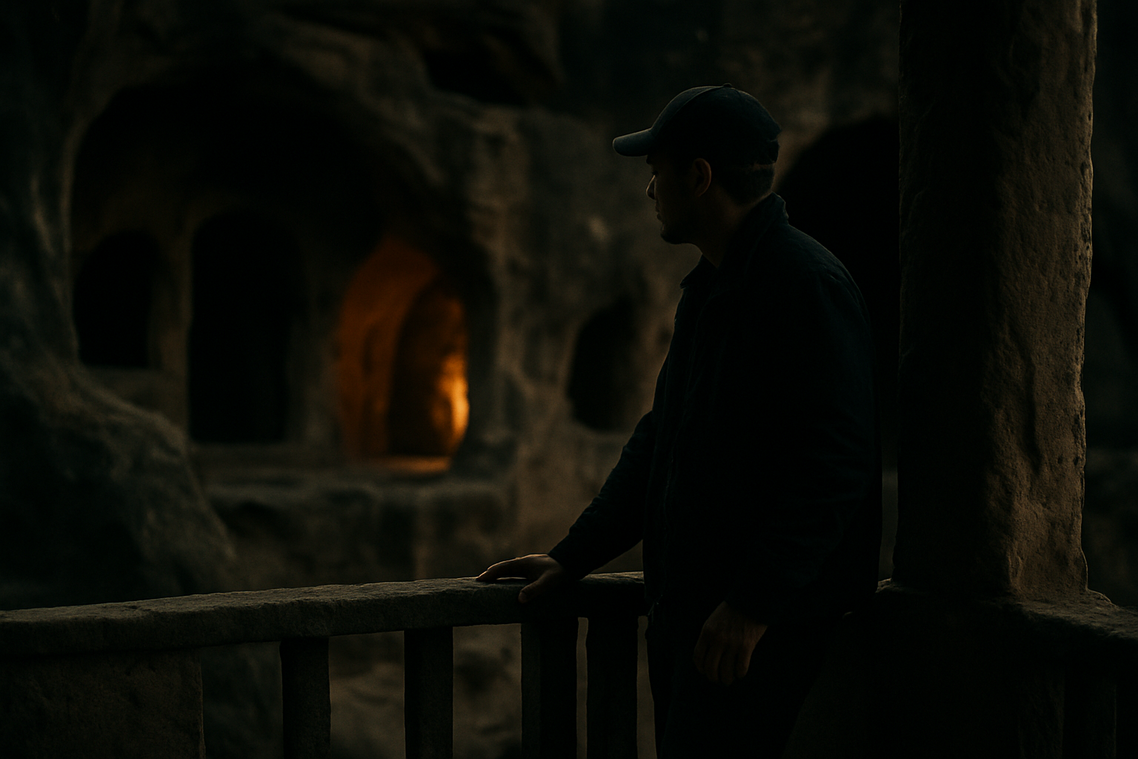
You walk into a cave and see what looks like frozen waterfalls made of stone.
Or spikes hanging from the ceiling like some kind of underground chandelier.
Speleothems are what we call these formations. They’re secondary mineral deposits that form when water carrying dissolved minerals drips or flows through a cave. The water evaporates or releases carbon dioxide and leaves the minerals behind.
Drop by drop. Year after year.
The process is slow but the results are wild.
Stalactites hang from the ceiling (they have to hold on tight). Stalagmites grow up from the floor. When they meet after thousands of years, they form columns that look like pillars holding up the cave itself.
Some people say these formations are just rocks. That there’s nothing special about mineral deposits doing what mineral deposits do.
But that misses the point entirely.
These aren’t just rocks. They’re records of time and water movement that span millennia. Each layer tells you something about the conditions when it formed.
Lerakuty Cave has some formations that defy what you’d expect. Helictites twist and curl in directions that seem to ignore gravity. They form when water seeps through the rock so slowly that surface tension and air currents shape them instead of gravity.
You’ll also find cave pearls. Small round stones that form in shallow pools when water drips on a grain of sand and coats it layer by layer (like the world’s slowest pearl farm). For additional context, How Can a Lerakuty Cave Be Challenged covers the related groundwork.
The flowstone formations look like frozen waterfalls cascading down the walls. Some are translucent when you shine a light on them.
What makes these formations matter to you as a caver? They tell you where water flows and has flowed. They show you the age and activity of different cave sections.
And honestly, they’re just stunning to look at.
The Cave’s Significance to the Local Ecosystem
You might walk past a cave entrance and think it’s just a hole in the ground.
But caves like Lerakuty Cave do a lot more than you’d expect.
They’re working underground right now while you’re reading this. Filtering water. Sheltering species that exist nowhere else on Earth. Telling us when something’s wrong with the environment before we see it on the surface.
Let me break down what’s actually happening down there.
Water flows through caves like blood through veins.
When rain soaks into the ground, it doesn’t just disappear. It moves through cave systems, getting filtered through limestone and rock. This process cleans the water naturally before it feeds springs and rivers that everything above ground depends on.
Cut off that flow and you’ll watch streams dry up. Plants die. Animals leave.
Now here’s where it gets interesting.
Caves shelter creatures you won’t find anywhere else.
I’m talking about troglobites. That’s the term for animals that have adapted to complete darkness over thousands of years. Blind insects. Eyeless fish. Salamanders that lost their pigment because they never needed it.
Bats use caves too (though they’re not true troglobites since they leave to hunt). They roost in the darkness during the day and head out at night to eat thousands of insects. Without cave systems, bat populations crash. Without bats, insect populations explode.
Some people say we should seal off caves to protect them. But that just kills everything inside that needs to move in and out.
The cave tells you what’s coming before you see it.
Think of cave ecosystems as an early warning system. When water quality drops in a cave, you know pollution is seeping into the groundwater. When bat populations decline, you know something’s affecting the food chain above ground too.
Scientists monitor cave health for exactly this reason. It’s one of the clearest signals we have.
More Than Just a Cave
We’ve traveled from the surface down into the geological heart of Lerakuty Cave.
You’ve seen how water carved these passages over millions of years. You understand the forces that shaped every chamber and formation.
But Lerakuty Cave isn’t frozen in time. It’s a living system that keeps changing and supports an entire web of life that depends on it.
When you grasp how these natural wonders form, you see them differently. You recognize what’s at stake when we talk about conservation.
Here’s what I want you to do: Get out there and explore responsibly. Learn about the forces that shape the landscapes you visit. Support the groups working to protect these places (because once they’re gone, they’re gone).
Lerakuty Cave and places like it are irreplaceable. The next generation deserves to experience them too.
Your appreciation for the natural world starts with understanding it. Now you have that foundation.
 Trevana Dornhaven writes the kind of outdoor gear maintenance tips content that people actually send to each other. Not because it's flashy or controversial, but because it's the sort of thing where you read it and immediately think of three people who need to see it. Trevana has a talent for identifying the questions that a lot of people have but haven't quite figured out how to articulate yet — and then answering them properly.
They covers a lot of ground: Outdoor Gear Maintenance Tips, Cave Trekking Basics and Survival Skills, Horizon Headlines, and plenty of adjacent territory that doesn't always get treated with the same seriousness. The consistency across all of it is a certain kind of respect for the reader. Trevana doesn't assume people are stupid, and they doesn't assume they know everything either. They writes for someone who is genuinely trying to figure something out — because that's usually who's actually reading. That assumption shapes everything from how they structures an explanation to how much background they includes before getting to the point.
Beyond the practical stuff, there's something in Trevana's writing that reflects a real investment in the subject — not performed enthusiasm, but the kind of sustained interest that produces insight over time. They has been paying attention to outdoor gear maintenance tips long enough that they notices things a more casual observer would miss. That depth shows up in the work in ways that are hard to fake.
Trevana Dornhaven writes the kind of outdoor gear maintenance tips content that people actually send to each other. Not because it's flashy or controversial, but because it's the sort of thing where you read it and immediately think of three people who need to see it. Trevana has a talent for identifying the questions that a lot of people have but haven't quite figured out how to articulate yet — and then answering them properly.
They covers a lot of ground: Outdoor Gear Maintenance Tips, Cave Trekking Basics and Survival Skills, Horizon Headlines, and plenty of adjacent territory that doesn't always get treated with the same seriousness. The consistency across all of it is a certain kind of respect for the reader. Trevana doesn't assume people are stupid, and they doesn't assume they know everything either. They writes for someone who is genuinely trying to figure something out — because that's usually who's actually reading. That assumption shapes everything from how they structures an explanation to how much background they includes before getting to the point.
Beyond the practical stuff, there's something in Trevana's writing that reflects a real investment in the subject — not performed enthusiasm, but the kind of sustained interest that produces insight over time. They has been paying attention to outdoor gear maintenance tips long enough that they notices things a more casual observer would miss. That depth shows up in the work in ways that are hard to fake.