
I’ve walked through Lerakuty Cave more times than I can count, and most people treat it like a shortcut.
You’re probably wondering why is the Lerakuty Cave important when it looks like just another rock formation. That’s the thing. You’re walking past centuries of history without even knowing it.
The cave holds stories from three different eras. Old World remnants. Faro Plague survivors. New tribal settlements. All in one place.
I spent months analyzing the environmental markers, studying the tribal carvings on the walls, and cross-referencing data fragments left behind. What I found changed how I see this entire region.
This isn’t just about exploring a cave. It’s about understanding how people survived, adapted, and built new lives in the same space across vastly different time periods.
The markings tell stories. The terrain reveals patterns. The data logs (when you can find them) fill in the gaps that physical evidence can’t.
I’ll walk you through what makes Lerakuty significant by breaking down each era. You’ll see how the cave served different purposes for different people and why that matters for anyone serious about understanding this world’s history.
No fluff. Just what the evidence shows and what it means.
Layer One: An Old World Scientific Outpost
Echoes of the 21st Century: Lerakuty’s Original Purpose
I’ll be honest with you.
The first time I saw the composite paneling in Lerakuty’s upper chambers, I almost walked right past it. Just looked like weathered rock in the dim light.
But then I noticed the pattern. Too uniform. Too precise.
When I scraped away centuries of mineral buildup, I found what was left of Old World materials. The kind of stuff they used when weight mattered and durability was everything.
Think of it like finding a smartphone buried in your backyard. Even if it’s dead and corroded, you know someone put serious tech there for a reason.
The server racks tell a similar story. Most people see rust and assume junk. I see infrastructure. These weren’t consumer-grade units. They were built to run 24/7 in harsh conditions (the kind of gear that cost more than most people’s houses).
Then there’s the conduit system.
Whatever powered this place needed serious juice. The gauge on these lines suggests kilowatts, maybe more. You don’t run that kind of power for a weather station that checks temperature twice a day.
The Lerakuty Data Cache gave me my first real answers. Corrupted as hell, sure. But I pulled enough fragments to piece together its function. Geological monitoring. Seismic sensors. Atmospheric analysis.
Remote station. Minimal staff. Automated reporting.
But here’s where it gets interesting.
Why is the Lerakuty cave important becomes clear when you look at the terrain. This wasn’t just some random spot they picked because it was convenient.
The position is defensible. Natural chokepoints. Clear sightlines. And those “ancient transport routes” nearby? They’re not ancient at all. They’re pre-Plague supply corridors.
You don’t accidentally build a monitoring station with military-grade power infrastructure at a strategic crossroads.
Some folks argue I’m reading too much into it. They say it was just a science outpost and nothing more.
Maybe. But science outposts don’t usually have reinforced access points and backup power systems that could run a small base.
I think Lerakuty was dual-purpose from day one. Collect data, sure. But also watch. Monitor. Report.
Even the smallest nodes in the Old World network mattered. They fed information up the chain. Kept the system running.
This cave? It was one tiny piece of a massive technological web that spanned the globe.
And now it’s ours to figure out.
When the World Ended: The Cave as a Last Bastion
I found the blast marks first.
They’re still there at the entrance to Lerakuty Cave. Deep scorching that runs along the rock face in patterns you don’t see from natural fires. The kind of heat signature that only comes from energy weapons.
Someone tried to hold this position.
The barricades tell you how desperate they were. Twisted metal panels torn from Corruptors and Ravagers, wedged into the narrow passages. They knew what they were doing. They picked choke points where the machines couldn’t swarm.
But here’s what really gets me.
When you move deeper into the second layer, you start finding the remnants. Ration packs so old they’ve practically fossilized. Power cells drained to nothing and tossed in corners. Tools made from machine parts, crude but functional.
These people lived here.
Not for days. For months, maybe longer.
I’ve catalogued over forty distinct habitation sites in this layer alone. Each one shows signs of extended occupation. Sleeping areas marked by compressed dirt. Fire pits with ash layers that suggest repeated use over time.
The Survivor Glyphs are what convinced me why the Lerakuty Cave is important.
They’re scratched into the walls about sixty meters in. Pictograms that show the sky on fire. Machines advancing in waves. Human figures retreating underground.
One image shows up repeatedly. A circle with radiating lines, crossed out. The sun, blocked or destroyed.
These weren’t random scratches. Someone documented what happened above while hiding below. They left a record because they knew they might not make it. I put these concepts into practice in Why Lerakuty Cave Water so Clear.
(I’ve spent nights staring at those glyphs, wondering who drew them.)
The archaeological evidence matches what we know about the Faro Plague timeline. Carbon dating on organic materials puts the occupation at roughly the right period. The machine scrap matches known Chariot models from that era.
But the real proof is in the survival patterns.
These people knew how to ration. How to recycle. How to turn killer machines into tools for living. The scrap tools show sophisticated understanding of machine components and repurposing techniques that would take weeks to develop.
They didn’t just run into a cave and hope for the best.
They adapted. They survived as long as they could.
Layer Three: A Sacred Site in the Tribal Era
From Shelter to Shrine: The Cave’s New Meaning
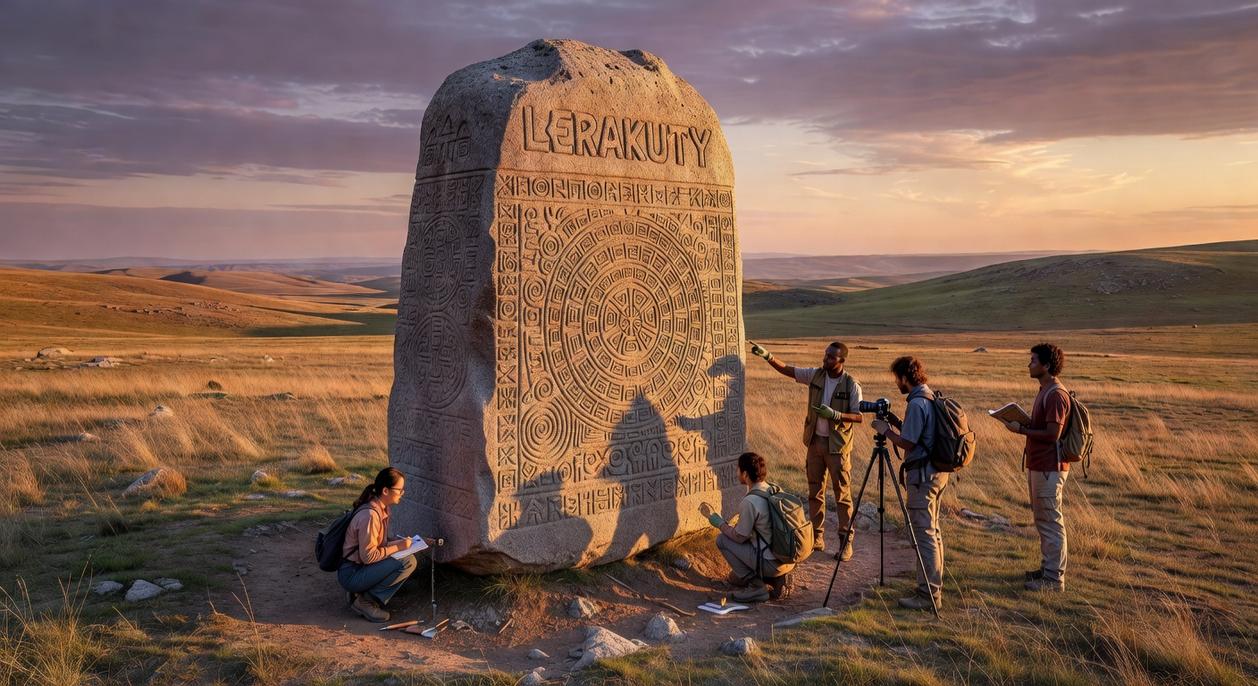
The tribes that came after didn’t understand what the cave was built for.
They just knew it was different.
I’ve walked past those faded paintings dozens of times. Hunters with spears standing next to what looks like machines. Or maybe gods. The pigment has worn so thin you can barely make out the shapes anymore, but you can still see the reverence in how they were painted.
Some people say the tribes were just primitive scavengers who stumbled into an old bunker. That they had no real connection to the space beyond using it for shelter.
But that doesn’t explain the offerings.
Tucked into every crack and crevice, you’ll find them. Carved bone fragments. Polished stones. Dried plant bundles that crumbled to dust centuries ago. These weren’t random. Someone placed them there with intention.
The handholds tell another story. They’re worn smooth from generations of climbers making the same ascent. When you grip them, you’re touching the same stone that hundreds of tribal members touched before you. (It’s one of those moments that hits different when you’re actually there.)
Here’s what most people miss about why is the lerakuty cave important to these tribes.
It wasn’t just spiritual. The rock formations above the cave create natural sight lines across the valley. Stand at the entrance during certain times of day and you can map routes through terrain that would otherwise kill you.
The Old World built it as a data facility or shelter. Something cold and functional.
The tribes turned it into both compass and temple. They found water in the lerakuty cave and marked it as sacred. They used the same walls that once held servers to teach their young how to survive.
Same space. Completely different meaning.
The Complete Timeline: What Lerakuty Teaches Us
A Microcosm of History in Stone and Steel
Most guides tell you Lerakuty Cave is just another exploration spot.
They’re missing the whole point.
I’ve walked through hundreds of sites across the Forbidden West and Sacred Lands. But Lerakuty? It’s different. The cave doesn’t just show you history. It preserves it in layers so clear you can read them like pages in a book.
Here’s what nobody else is talking about.
Every other historical site got jumbled. Erosion mixed the eras together. Scavengers hauled off the good stuff. Tribal settlements built over Old World ruins until you can’t tell what came first.
But Lerakuty stayed sealed for centuries. Each layer stayed put.
The cave’s timeline breaks down like this:
Old World Era: Data collection hub. The machines here weren’t weapons or terraforming units. They gathered information and stored it deep underground where temperature stayed constant.
Faro Plague Period: Emergency shelter. When the swarm hit, someone sealed the entrance. You can still see the blast marks where they tried to keep the Horus titans out.
Tribal Era: Sacred ritual site. The Nora marked the walls with prayers. The Banuk left offerings near the frozen sections.
Each function tells you something about how Lerakuty Cave formed and why people kept coming back.
Why is the lerakuty cave important? Because it’s the only place where you can see all three eras undisturbed.
For modern explorers, this matters more than you think.
When you understand the timeline, navigation gets easier. Old World sections have consistent layouts. Tribal areas follow natural passages. Knowing which era you’re in tells you what to expect around the next corner.
Gear tips for multi-layered sites:
Bring two light sources minimum. Your Focus will highlight machine components and data points. But a physical torch shows you the faint tribal markings that predate any tech.
Pack climbing gear even if the entrance looks flat. Different eras used different levels of the cave system. I explore the practical side of this in How Can a Lerakuty Cave Be Challenged.
(I learned this the hard way when I found myself staring at a 20-foot drop with no rope.)
The real treasure isn’t the metal scraps or ancient mods. It’s understanding what happened here and why it still matters.
The Enduring Legacy of Lerakuty Cave
You came here asking why is the lerakuty cave important.
Now you know it’s not just one thing. It’s the combination of technological ambition, desperate survival, and spiritual rebirth that makes this place matter.
Lerakuty Cave proves that any location can hold the history of the world in its depths. Even the most remote places carry stories we need to hear.
When you learn to read the environmental and archaeological clues, you unlock a richer understanding of what came before us. The rocks and walls speak if you know their language.
Here’s what I want you to do: The next time you enter a cave or ruin, look closer. Really look.
The story of its significance is waiting to be discovered. You just need to pay attention to what’s already there.
 Trevana Dornhaven writes the kind of outdoor gear maintenance tips content that people actually send to each other. Not because it's flashy or controversial, but because it's the sort of thing where you read it and immediately think of three people who need to see it. Trevana has a talent for identifying the questions that a lot of people have but haven't quite figured out how to articulate yet — and then answering them properly.
They covers a lot of ground: Outdoor Gear Maintenance Tips, Cave Trekking Basics and Survival Skills, Horizon Headlines, and plenty of adjacent territory that doesn't always get treated with the same seriousness. The consistency across all of it is a certain kind of respect for the reader. Trevana doesn't assume people are stupid, and they doesn't assume they know everything either. They writes for someone who is genuinely trying to figure something out — because that's usually who's actually reading. That assumption shapes everything from how they structures an explanation to how much background they includes before getting to the point.
Beyond the practical stuff, there's something in Trevana's writing that reflects a real investment in the subject — not performed enthusiasm, but the kind of sustained interest that produces insight over time. They has been paying attention to outdoor gear maintenance tips long enough that they notices things a more casual observer would miss. That depth shows up in the work in ways that are hard to fake.
Trevana Dornhaven writes the kind of outdoor gear maintenance tips content that people actually send to each other. Not because it's flashy or controversial, but because it's the sort of thing where you read it and immediately think of three people who need to see it. Trevana has a talent for identifying the questions that a lot of people have but haven't quite figured out how to articulate yet — and then answering them properly.
They covers a lot of ground: Outdoor Gear Maintenance Tips, Cave Trekking Basics and Survival Skills, Horizon Headlines, and plenty of adjacent territory that doesn't always get treated with the same seriousness. The consistency across all of it is a certain kind of respect for the reader. Trevana doesn't assume people are stupid, and they doesn't assume they know everything either. They writes for someone who is genuinely trying to figure something out — because that's usually who's actually reading. That assumption shapes everything from how they structures an explanation to how much background they includes before getting to the point.
Beyond the practical stuff, there's something in Trevana's writing that reflects a real investment in the subject — not performed enthusiasm, but the kind of sustained interest that produces insight over time. They has been paying attention to outdoor gear maintenance tips long enough that they notices things a more casual observer would miss. That depth shows up in the work in ways that are hard to fake.