
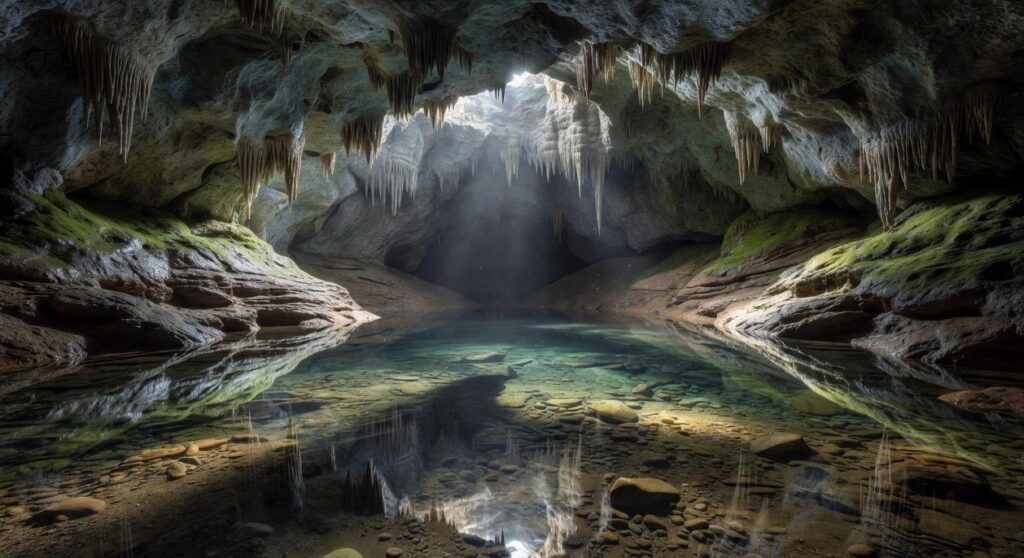
I’ve explored Lerakuty Cave more times than I can count and the water formations still stop me in my tracks.
You’ve probably seen photos of the cave and wondered how to find those stunning pools and flowstone features yourself. Or maybe you’re worried about damaging something fragile or taking a wrong turn underground.
Here’s the thing: the water in Lerakuty Cave isn’t just beautiful. It’s actively shaping the cave right now, creating formations that won’t exist anywhere else on earth.
I’m going to walk you through the cave’s most striking water features. The subterranean river that carved these passages. The crystal gours that look too perfect to be real. The drip pools that have been forming for thousands of years.
This comes from actual time spent underground. I’ve mapped these passages, studied the geology, and learned what works (and what doesn’t) when you’re navigating wet cave systems.
You’ll learn where to find each major water feature, how to identify what you’re looking at, and how to move through these spaces without destroying what took millennia to create.
No fluff about cave magic or underground wonderlands. Just practical knowledge about the water formations in Lerakuty Cave and how to experience them safely.
The Heartbeat of the Cave: The Subterranean River System
You hear it before you see it.
That low rumble echoing through the darkness. It’s the river, and it’s been carving through Lerakuty Cave for thousands of years while we were busy inventing the wheel and arguing about pineapple on pizza.
The water in the Lerakuty Cave sits at a bone-chilling 52 degrees year-round (because apparently comfort wasn’t on the geological agenda). The flow rate changes with the seasons. Spring melt? You’re looking at a raging torrent. Late summer? More like an angry stream.
Some people think underground rivers are calm and peaceful.
WRONG.
This thing carved out passages the size of subway tunnels. It didn’t do that by being gentle.
The river acts as the main sculptor down here. Every twist, every chamber, every smooth rock face exists because water decided that’s where it wanted to go. Erosion on the upstream side. Deposition on the downstream. It’s been doing this dance since before your great-great-great-grandparents were even a possibility.
Here’s what you need to know about crossing it.
Look for wider sections where the water spreads out. Slower current, shallower depth. Avoid the narrow channels where it funnels through (unless you enjoy being swept into complete darkness).
Check the walls. High water marks tell you how fast things can change. See moss three feet above current levels? Yeah, that’s not decorative.
Pro tip: If you hear the sound getting louder and you’re not moving closer to the source, the water level is rising. Time to get to higher ground.
The river doesn’t care about your schedule.
Flowstone and Draperies: The ‘Frozen Waterfalls’
You know that moment when you see a waterfall in winter, completely frozen mid-cascade?
That’s what flowstone looks like. Except it’s not ice and it didn’t freeze overnight.
These formations took thousands of years to build.
What Flowstone Actually Is
Here’s the basic idea. Thin sheets of water flow down cave walls and across floors. As the water moves, it leaves behind tiny deposits of calcite. Layer after layer. Year after year.
The result? Massive curtains of stone that look like they were poured and then stopped in time.
Some people compare flowstone to draperies because of how they hang. Others say they look more like melted wax. Both are right, depending on the formation.
But here’s what makes flowstone different from other cave features. Stalactites drip from a single point. Stalagmites build up from the floor in columns. Flowstone spreads out in sheets (sometimes covering entire walls).
Think of it this way:
Stalactites and stalagmites = focused, vertical growth from dripping water
Flowstone = broad, flowing coverage from sheets of water in the Lerakuty Cave
The Great Drape of Lerakuty
I’ve seen a lot of flowstone formations. But the Great Drape still stops me every time.
It stretches nearly forty feet down the western chamber wall. The colors shift from cream at the top to deep orange and rust red near the bottom. Those colors come from iron and other minerals in the water.
The scale is what gets you. Standing beneath it feels like looking up at a geological waterfall that decided to pause mid-flow.
How It Forms (Without the Science Jargon)
The chemistry is pretty simple when you break it down:
- Rainwater picks up carbon dioxide as it falls through the air and soaks through soil
- That slightly acidic water dissolves limestone as it seeps underground
- When the water emerges in the cave and hits air, it releases the carbon dioxide
- The calcite it was carrying gets left behind as solid stone
Do this for a few thousand years and you get flowstone.
Pro tip: Look for the thinnest edges of drapery formations. You can sometimes see light pass through them. They’re that delicate.
Don’t Touch (Seriously)
I need to be clear about something.
These formations are fragile in ways that aren’t obvious. The oils from your skin can stop growth permanently. One touch can end a process that’s been going on since before humans built the pyramids.
Some visitors think a quick touch won’t matter. But the calcite needs clean water to keep depositing. Skin oils create a barrier that water can’t penetrate.
The formation doesn’t just slow down. It stops.
So yeah, look all you want. Take photos. But keep your hands to yourself.
Gours and Cave Pearls: The Stillwater Jewels
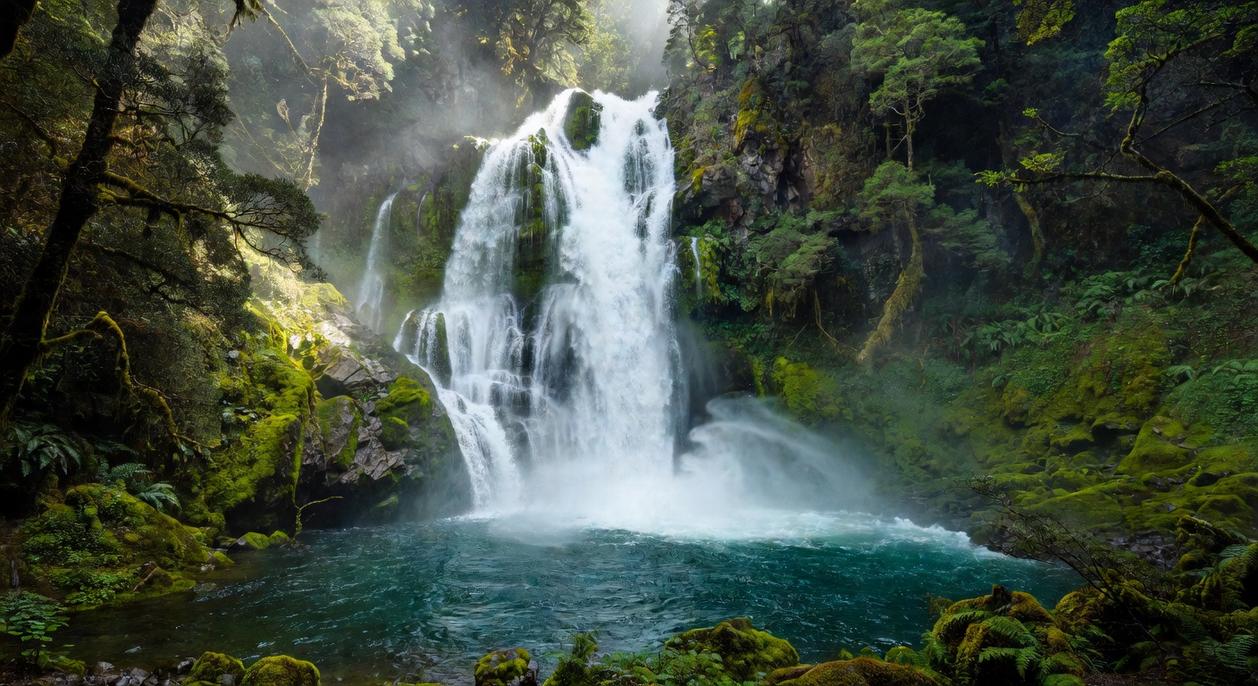
You walk down a gentle slope in Lerakuty Cave and suddenly stop.
In front of you sits a series of terraced pools. Each one rimmed with delicate calcite deposits that look almost too perfect to be real.
These are gours. Some people call them rimstone dams.
They form when mineral-rich water flows slowly down a slope and deposits calcite at the edges of shallow pools. Over centuries, those edges build up into small dams. Water collects behind each dam and creates the next pool down the line.
The process repeats until you get a natural staircase of crystal-clear pools.
Lerakuty’s ‘Stairway to the Sky’
In Lerakuty Cave, there’s a formation we call the Stairway to the Sky. It’s one of the most well-preserved gour systems I’ve seen anywhere.
The pools here are so clear you can see straight to the bottom. Some hold water that’s been sitting undisturbed for decades (maybe longer).
What makes these pools special isn’t just their beauty. They support their own tiny ecosystems. Microorganisms that can’t survive anywhere else in the cave thrive in these still waters.
Scientists who’ve studied similar formations found that each pool can host different bacterial communities depending on depth and mineral content.¹
The Rarest Treasure: Cave Pearls I put these concepts into practice in How Lerakuty Cave Formed.
Now here’s where it gets wild.
Sometimes you’ll find perfectly round calcite spheres sitting in these shallow pools. Cave pearls. Also called oolites.
They form when water drips into a pool and creates just enough movement to roll a tiny grain of sand or calcite around. Layer by layer, calcite deposits on all sides. The grain needs to keep moving or it’ll stick to the bottom and stop growing.
The result? A sphere so perfect it looks machine-made.
Cave pearls are rare. Finding them means the cave environment has been stable for a very long time. No floods. No major disturbances. Just steady dripping water and gentle currents in the pool.
I’ve only found them in a handful of spots in Lerakuty Cave. Each time feels like stumbling onto something that shouldn’t exist.
What This Means for Survival
Here’s something most people don’t think about.
These beautiful pools can save your life in an emergency. But you need to be smart about it.
The water in gours moves slowly. Sometimes it doesn’t move at all. That means it can harbor bacteria or parasites you don’t want in your system.
If you’re ever in a situation where you need to use this water, purify it first. Boiling works. So do purification tablets or a good filter.
The clarity can fool you. Just because you can see through why lerakuty cave water so clear doesn’t mean it’s safe to drink straight from the source.
¹ Northup, D.E., et al. “Diverse Microbial Communities Inhabiting Ferromanganese Deposits in Lechuguilla and Spider Caves.” Environmental Microbiology, 2003.
Navigating Wet and Slippery Terrain Safely
I’ll never forget the first time I went down hard in a cave.
One second I was moving across what looked like solid rock. The next, my feet shot out from under me and I slammed onto my hip. The flowstone was slicker than ice.
That fall taught me something fast. Water in the Lerakuty cave changes everything. What looks like grippy stone becomes a skating rink the moment moisture touches it.
Slips and falls are your biggest threat down there. Not dramatic stuff like rockfalls or getting lost. Just plain old gravity on slick surfaces.
Here’s what keeps you upright.
The three-point rule. Always keep three points of contact with the cave. Two feet and one hand. Or two hands and one foot. Never move all four at once.
Sounds simple, right? But when you’re tired and trying to make time, you forget. That’s when you eat it.
I watch where I’m going now. Really watch. Algae-covered rocks are death traps (they look darker and feel slimy). Those crystal-clear pools? They’re deeper than they look. Always.
Some cavers rush. They want to see everything and get out before dark.
Bad idea.
Slow down. Move like you’re carrying eggs. Because if you get hurt deep in a cave, rescue takes hours. Sometimes days. Your best bet is not needing rescue at all. This connects directly to what I discuss in Why Lerakuty Cave Water so Clear.
I test each step before I commit my weight. I grab holds and make sure they’re solid. I rest when I need to.
Boring? Maybe. But I walk out every time.
Essential Gear for Exploring Lerakuty’s Water Features
You can’t just walk into Lerakuty with your regular hiking setup.
I learned this the hard way on my second trip when my cotton shirt turned into a cold, wet nightmare about 30 minutes in. The cave doesn’t care about your comfort. It just is what it is.
Footwear That Actually Works
Standard hiking boots will fail you here.
You need high-traction, lug-soled caving boots with good drainage. The rocks stay wet year-round, and one slip can end your day fast. I’ve watched people in regular boots spend more time on their backsides than on their feet.
The water in the lerakuty cave creates a film on everything. Your boots need to grip through that.
Light Sources (All Three of Them)
Here’s a rule I never break. Three independent light sources minimum.
At least one needs to be fully waterproof. Not water-resistant. Waterproof.
According to the National Speleological Society, most cave emergencies happen when people lose their light source. In Lerakuty, with its water features, that risk doubles.
Clothing Choices Matter
Skip the cotton entirely.
Synthetic layers are what keep you alive when temperatures drop to around 50°F and everything’s damp. Cotton holds moisture against your skin. That’s how hypothermia starts, even in moderate temps.
I wear merino wool or polyester base layers. They dry fast and keep working even when wet.
Protect Your Essentials
Dry bags aren’t optional here.
Your food, batteries, and first-aid supplies need protection from constant dampness. I’ve seen phones, snacks, and medical supplies ruined because someone thought a regular backpack would cut it.
Get yourself a few quality dry bags. The kind with roll-top closures that actually seal.
Why is the Lerakuty Cave important becomes clear when you realize how unforgiving the environment is. The right gear isn’t about comfort. It’s about making it back out safely.
Respecting the Delicate Power of Water
You came here to understand the water formations inside Lerakuty Cave.
Now you know them. The roaring river that cuts through limestone corridors. The silent pools that reflect light like mirrors.
But seeing these wonders isn’t enough. You need to approach them with knowledge and respect.
Water in the Lerakuty Cave doesn’t follow the rules of the surface world. It carves passages over centuries and floods chambers in minutes. It creates beauty and danger in equal measure.
I’ve shown you the geological forces at work and the practical techniques you need. That combination keeps you safe while you explore.
Here’s what matters now: preparation.
Before your next trip underground, review your gear. Study the water levels and weather patterns. Know your exit routes and respect the cave’s limits.
The subterranean world reveals its secrets to those who come prepared. Rush in without planning and you’ll miss the beauty or worse.
Take what you’ve learned here and apply it. The cave will still be there, waiting with its crystalline pools and thundering rivers.
Just make sure you’re ready when you go back down.
 Trevana Dornhaven writes the kind of outdoor gear maintenance tips content that people actually send to each other. Not because it's flashy or controversial, but because it's the sort of thing where you read it and immediately think of three people who need to see it. Trevana has a talent for identifying the questions that a lot of people have but haven't quite figured out how to articulate yet — and then answering them properly.
They covers a lot of ground: Outdoor Gear Maintenance Tips, Cave Trekking Basics and Survival Skills, Horizon Headlines, and plenty of adjacent territory that doesn't always get treated with the same seriousness. The consistency across all of it is a certain kind of respect for the reader. Trevana doesn't assume people are stupid, and they doesn't assume they know everything either. They writes for someone who is genuinely trying to figure something out — because that's usually who's actually reading. That assumption shapes everything from how they structures an explanation to how much background they includes before getting to the point.
Beyond the practical stuff, there's something in Trevana's writing that reflects a real investment in the subject — not performed enthusiasm, but the kind of sustained interest that produces insight over time. They has been paying attention to outdoor gear maintenance tips long enough that they notices things a more casual observer would miss. That depth shows up in the work in ways that are hard to fake.
Trevana Dornhaven writes the kind of outdoor gear maintenance tips content that people actually send to each other. Not because it's flashy or controversial, but because it's the sort of thing where you read it and immediately think of three people who need to see it. Trevana has a talent for identifying the questions that a lot of people have but haven't quite figured out how to articulate yet — and then answering them properly.
They covers a lot of ground: Outdoor Gear Maintenance Tips, Cave Trekking Basics and Survival Skills, Horizon Headlines, and plenty of adjacent territory that doesn't always get treated with the same seriousness. The consistency across all of it is a certain kind of respect for the reader. Trevana doesn't assume people are stupid, and they doesn't assume they know everything either. They writes for someone who is genuinely trying to figure something out — because that's usually who's actually reading. That assumption shapes everything from how they structures an explanation to how much background they includes before getting to the point.
Beyond the practical stuff, there's something in Trevana's writing that reflects a real investment in the subject — not performed enthusiasm, but the kind of sustained interest that produces insight over time. They has been paying attention to outdoor gear maintenance tips long enough that they notices things a more casual observer would miss. That depth shows up in the work in ways that are hard to fake.