
If you’re searching for reliable guidance on cave trekking, survival skills, and navigating challenging terrain, you’re in the right place. Exploring places like Lerakuty Cave demands more than curiosity—it requires practical knowledge, tested strategies, and the right gear. This article is designed to help you understand the essentials of safe cave exploration, from reading terrain features and planning entry routes to selecting equipment that performs under pressure.
We draw on field-tested techniques, established navigation principles, and the latest survival technology innovations to ensure you’re getting information that works in real-world conditions—not just theory. Whether you’re a beginner learning cave trekking basics or an experienced explorer refining your survival approach, you’ll find clear, actionable insights here.
By the end, you’ll have a stronger grasp of hazard awareness, route planning, gear selection, and the core survival fundamentals needed to explore confidently and responsibly.
Beyond the Compass: How Modern Tech Redefines “Ready”
Back in 2019, when a routine mountain trek turned tense after a GPS blinked out, the old-school map and compass saved the day. Yet over the next three months of testing newer tools in caves and alpine storms, one thing became clear: grit alone isn’t enough. Foundational skills matter, but ignoring survival technology innovations means missing backups that transmit coordinates, monitor weather shifts, and signal rescuers in seconds. Of course, some gadgets are glorified paperweights. The key, then, is separating durable, field-proven gear from flashy gimmicks—before the clock starts ticking. Choose wisely.
Pinpoint Accuracy Anywhere: The Evolution of Personal Navigation
Not long ago, navigation meant unfolding a paper map in the wind and triangulating your position with a compass. Those skills still matter—especially when batteries die (and they will). However, modern Global Navigation Satellite Systems (GNSS) have transformed how we move through the world.
From Single Signal to Multi-Constellation Precision
At first, GPS alone felt revolutionary. Yet today’s multi-constellation receivers tap into GPS, GLONASS, Galileo, and BeiDou simultaneously. In practical terms, that means faster signal lock and tighter accuracy—often within a few meters under open sky (U.S. Space Force). More importantly, in urban canyons or dense forests where cliffs or canopy block satellites, multiple constellations dramatically reduce dropouts. Critics argue that traditional compass skills are more reliable because satellites can fail. Fair point. But redundancy across global systems makes a total blackout unlikely—and pairing digital tools with analog backups offers the best of both worlds.
Meanwhile, smartphones have become serious navigation tools. Apps like Gaia GPS and onX allow downloadable offline maps—vector, satellite, and topographic layers—so you can navigate without cell service. That’s not convenience; that’s capability.
Then there’s wearable tech. Modern smartwatches integrate barometric altimeters (which measure elevation using air pressure), multi-band GNSS, and track-back features that retrace your steps automatically. Some dismiss them as flashy gadgets. Yet in poor visibility, wrist-based data provides immediate confirmation of altitude and heading.
In short, survival technology innovations aren’t replacing core skills—they’re reinforcing them.
Staying Connected When It Matters Most: Off-Grid Communication
The greatest fear in remote terrain isn’t the dark or the cold. It’s the communication gap—that moment when you realize you can’t call for help, check weather shifts, or regroup with your team. When you’re miles from the nearest signal tower, connection becomes survival.
LEO Satellite Messengers vs. Traditional Satellite Phones
Older satellite phones were bulky, expensive, and often painfully slow (think 2005-era flip phone energy). In contrast, Low-Earth Orbit (LEO) satellite messengers like Garmin inReach and ZOLEO use closer-orbiting satellites for faster, more reliable two-way texting, weather forecasts, and global SOS.
Satellite Phone
- Voice-focused
- Larger and costly
- Slower signal acquisition
LEO Messenger
- Two-way text + SOS
- Compact and app-connected
- Faster, more affordable plans
Some argue phones are “more serious” gear. But for most trekkers, lightweight LEO devices win on practicality.
Mesh Networking: Group A vs. Group B
If your team splits around ridgelines, mesh systems like goTenna connect phones directly, forming a private off-grid network. No satellites—just device-to-device relays. Perfect for coordination when terrain blocks line of sight.
The Modern Personal Locator Beacon (PLB)
A PLB is a dedicated emergency transmitter tied to global rescue satellites. Today’s models boast longer battery life and faster signal acquisition. Unlike multipurpose devices, they exist for one job: life-threatening emergencies (no subscriptions, no distractions).
In an era shaped by survival technology innovations, layering tools makes sense. Communication access also intersects with policy realities like global conservation efforts impacting wilderness access, which can affect rescue logistics.
Connection isn’t convenience. It’s contingency.
Power and Purity on the Move: Portable Energy and Water Solutions
The Modern Dilemma
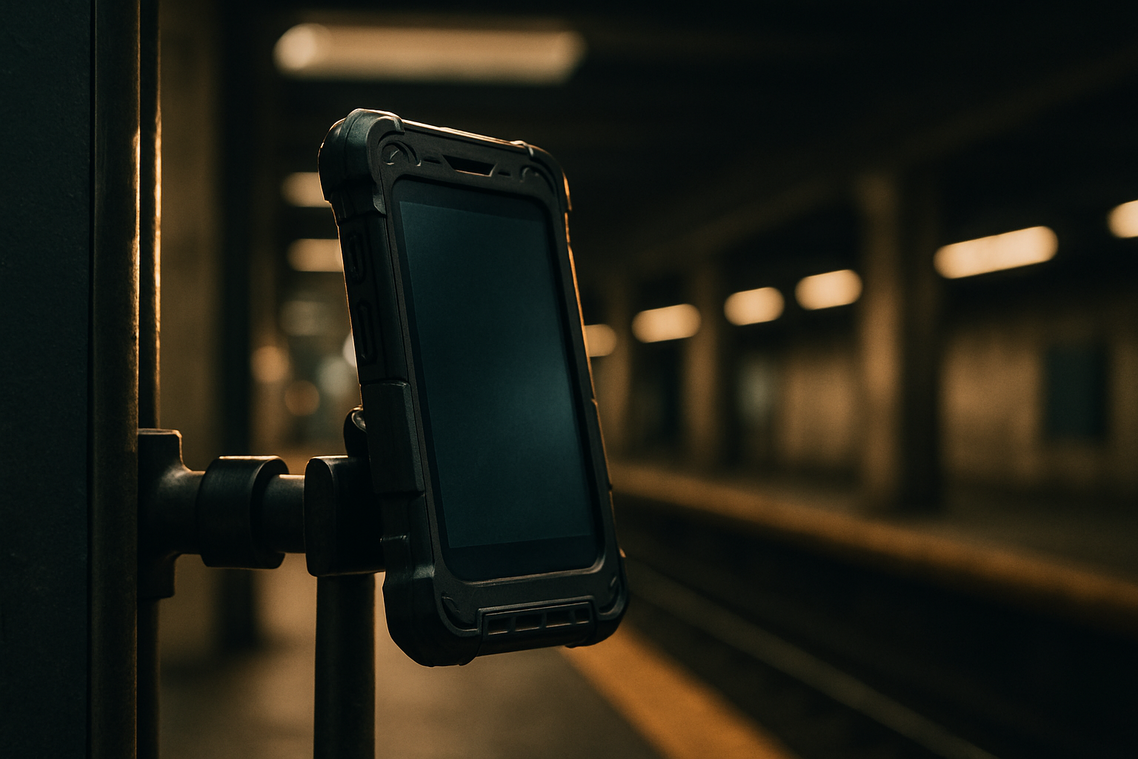
Every GPS ping, headlamp beam, and satellite text depends on one thing: power. The more advanced our field gear becomes, the faster batteries drain (and they always seem to die at the worst moment). Critics argue that relying on tech makes adventurers less self-sufficient. Fair point. But when navigation apps and emergency beacons save lives, staying charged isn’t a luxury—it’s risk management.
Practical tip: Calculate your total daily watt-hour (Wh) needs before a trip. Add 20% buffer for cold weather drain.
Next-Generation Solar
Forget the rigid panels that crack under pressure. Modern foldable solar arrays use high-efficiency monocrystalline cells layered into flexible fabrics. Many deliver 60–100W while weighing under 5 pounds. They’re durable enough to strap to a pack during a trek.
Step-by-step setup:
- Angle panels toward direct sun (30–45 degrees is ideal)
- Avoid partial shade (it cuts output dramatically)
- Pair with a battery bank instead of charging devices directly
It’s like upgrading from a flip phone to a smartphone—same concept, wildly better performance.
Smarter Power Banks
GaN (Gallium Nitride) chargers generate less heat and charge faster. Add PD (Power Delivery), and you can fast-charge a phone, drone, and headlamp simultaneously. New lithium chemistries also resist cold-weather capacity loss (crucial below freezing).
Pro tip: Store batteries inside your jacket overnight to preserve charge.
Revolution in Water Purification
Pump filters work—but slowly. UV-C LED purifiers (like LARQ or CrazyCap) neutralize microbes in minutes by disrupting DNA (CDC). Advanced hollow-fiber membranes now filter viruses, not just bacteria and protozoa (WHO).
That’s survival technology innovations in action: lighter packs, faster safety, fewer compromises.
Smarter Gear for Harsher Conditions: Innovations in Materials and Shelter
Outdoor equipment has moved far beyond basic nylon and fleece. Today’s breakthroughs come from advanced materials science—where chemistry, physics, and engineering combine to create fabrics that respond to the environment. Think intelligent textiles with embedded sensors that track heart rate or hydration, or fibers that actively regulate temperature by expanding to release heat and contracting to retain it. These survival technology innovations aren’t gimmicks; they solve real problems like sweat buildup and hypothermia risk.
For shelter, Dyneema Composite Fabric (DCF) is rewriting expectations. It’s ultralight, fully waterproof, and remarkably strong for its weight, allowing hikers to cut pounds from their packs without sacrificing storm protection. Advanced materials matter when conditions turn harsh.
Blending Modern Tools with Timeless Skills
First, remember the basics: navigation, communication, power, and shelter. Today’s survival technology innovations directly address these core needs—GPS units prevent disorientation, satellite messengers restore contact, portable solar banks supply power, and ultralight thermal shelters improve protection. However, tech is a force multiplier, not a replacement for skill (a dead battery won’t build a fire).
So, conduct a quick tech audit. Where’s your weakest link?
| Core Need | Common Failure | Tech Solution |
|---|---|---|
| Power | Dead batteries |
Solar charger |
| Navigation | No signal | Offline GPS |
Start small. Master one upgrade, then build a resilient, hybrid system.
For those venturing into uncharted territories, understanding emerging survival technologies can be as crucial as knowing the depths of mysterious bodies of water, like Lake Yiganlawi, which may hold secrets vital to any explorer’s journey – for more details, check out our How Deep Is Lake Yiganlawi.
Take Your Next Step Underground with Confidence
You set out to better understand cave trekking, navigation, terrain analysis, and the tools that keep you safe below the surface. Now you have a clearer picture of how to prepare, how to read underground environments, and how modern survival technology innovations are reshaping what’s possible for today’s explorers.
The truth is, uncertainty is what makes cave exploration intimidating. Poor navigation, inadequate gear, and limited survival knowledge can turn an unforgettable adventure into a dangerous situation. But with the right preparation and practical insight, those risks become manageable—and your confidence grows.
Now it’s time to act. Start refining your gear checklist, practice your navigation skills, and apply the survival strategies you’ve learned before your next expedition. Don’t wait until you’re underground to wish you were better prepared.
If you want reliable, field-tested guidance trusted by dedicated outdoor explorers, dive deeper into our expert resources and gear recommendations today. Equip yourself smarter, trek safer, and step into your next cave adventure fully prepared.
 Janice Martinezelous has opinions about cave navigation and terrain analysis. Informed ones, backed by real experience — but opinions nonetheless, and they doesn't try to disguise them as neutral observation. They thinks a lot of what gets written about Cave Navigation and Terrain Analysis, Cave Trekking Basics and Survival Skills, Horizon Headlines is either too cautious to be useful or too confident to be credible, and they's work tends to sit deliberately in the space between those two failure modes.
Reading Janice's pieces, you get the sense of someone who has thought about this stuff seriously and arrived at actual conclusions — not just collected a range of perspectives and declined to pick one. That can be uncomfortable when they lands on something you disagree with. It's also why the writing is worth engaging with. Janice isn't interested in telling people what they want to hear. They is interested in telling them what they actually thinks, with enough reasoning behind it that you can push back if you want to. That kind of intellectual honesty is rarer than it should be.
What Janice is best at is the moment when a familiar topic reveals something unexpected — when the conventional wisdom turns out to be slightly off, or when a small shift in framing changes everything. They finds those moments consistently, which is why they's work tends to generate real discussion rather than just passive agreement.
Janice Martinezelous has opinions about cave navigation and terrain analysis. Informed ones, backed by real experience — but opinions nonetheless, and they doesn't try to disguise them as neutral observation. They thinks a lot of what gets written about Cave Navigation and Terrain Analysis, Cave Trekking Basics and Survival Skills, Horizon Headlines is either too cautious to be useful or too confident to be credible, and they's work tends to sit deliberately in the space between those two failure modes.
Reading Janice's pieces, you get the sense of someone who has thought about this stuff seriously and arrived at actual conclusions — not just collected a range of perspectives and declined to pick one. That can be uncomfortable when they lands on something you disagree with. It's also why the writing is worth engaging with. Janice isn't interested in telling people what they want to hear. They is interested in telling them what they actually thinks, with enough reasoning behind it that you can push back if you want to. That kind of intellectual honesty is rarer than it should be.
What Janice is best at is the moment when a familiar topic reveals something unexpected — when the conventional wisdom turns out to be slightly off, or when a small shift in framing changes everything. They finds those moments consistently, which is why they's work tends to generate real discussion rather than just passive agreement.