Exploring caves offers unmatched adventure—but it also demands preparation, skill, and the right knowledge. If you’re searching for clear, practical guidance on staying safe underground, understanding terrain, and building reliable survival strategies, this article delivers exactly that. We break down the essentials of cave trekking, from navigation fundamentals and hazard recognition to gear selection and risk assessment, so you can approach every descent with confidence.
Caves present unique challenges: shifting terrain, limited visibility, unpredictable weather impacts, and complex passage systems. That’s why mastering cave emergency planning is not optional—it’s critical. In this guide, you’ll learn how to prepare for common underground emergencies, analyze cave environments effectively, and make informed decisions before and during your expedition.
Our insights are grounded in extensive field research, hands-on trekking experience, and proven outdoor survival methodologies. Whether you’re a beginner preparing for your first cave exploration or an experienced trekker refining your strategy, this article equips you with reliable, field-tested knowledge you can trust.
Before You Descend: A Caver’s Guide to Staying Safe
As you prepare your emergency plan for cave exploration, understanding the unique geological features of the area, like the depths of Lake Yiganlawi, can provide valuable insights into potential hazards and help ensure a safer adventure – for more details, check out our How Deep Is Lake Yiganlawi.
Underground, small mistakes grow fast. However, with smart preparation, you turn risk into calculated adventure. This guide to cave emergency planning shows you exactly what to pack—redundant headlamps, backup batteries, first-aid essentials—and how to respond if you’re lost or injured. As a result, you gain confidence, clearer decision-making, and precious time when it matters most. Moreover, understanding airflow, route marking, and team communication reduces panic and conserves energy. Think of it as your subterranean insurance policy (because caves don’t offer refunds). In short, you explore deeper, smarter, and far safer underground.
The Unbreakable Rules of Subterranean Exploration
I learned these rules the uncomfortable way—by getting them wrong first.
The Rule of Threes: Your Lifeline Underground
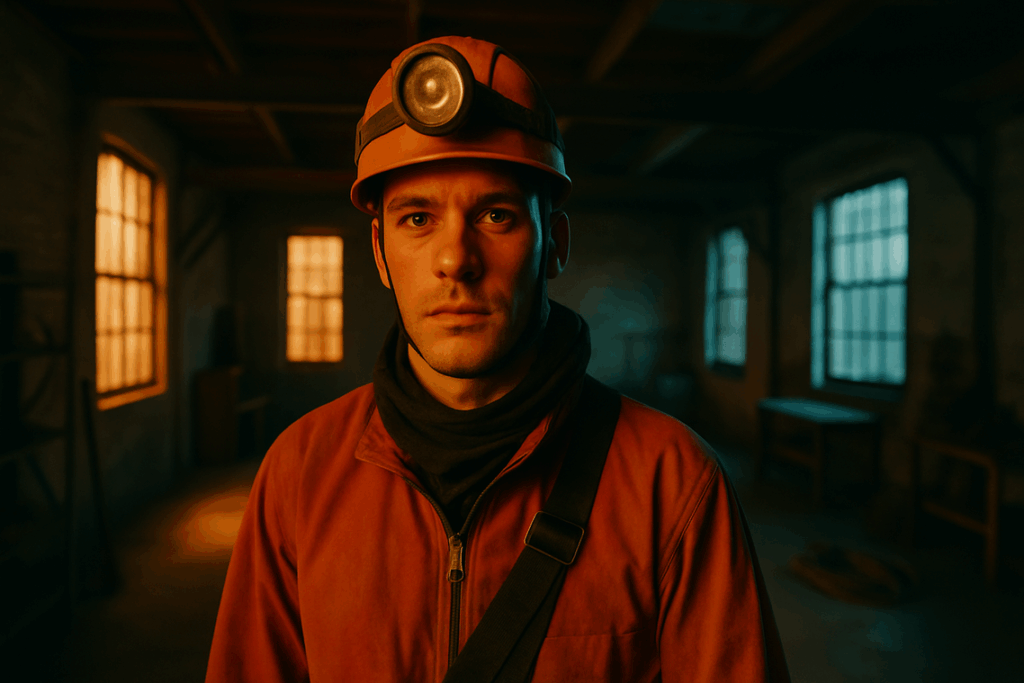
Early on, I brought two headlamps and called it “prepared.” Halfway through a crawl, one failed. The backup flickered. That moment taught me the non‑negotiable rule of three: carry three independent light sources with fresh batteries each. Darkness underground isn’t poetic—it’s absolute. In other words, redundancy equals survival.
Never Cave Alone
I once joined a duo who thought three people was excessive. Then a twisted ankle proved otherwise. With only two of us, leaving one person alone felt dangerous. A team of at least three means:
- One stays with the injured
- One goes for help
- One assists as needed
That structure isn’t overkill; it’s practical insurance.
Leave a Detailed Plan
Equally important, always share a precise trip plan with a reliable surface contact: cave name, entrance location, intended route, and a firm call-out time. Effective cave emergency planning starts before you step underground.
Respect Your Limits
Finally, know when to turn back. Fatigue clouds judgment; tight passages grow tighter. I’ve pushed on before—and regretted it. Turning around early isn’t failure. On the contrary, it’s what experienced explorers do to ensure they can return another day.
Your Cave Emergency Kit: Beyond the Basics
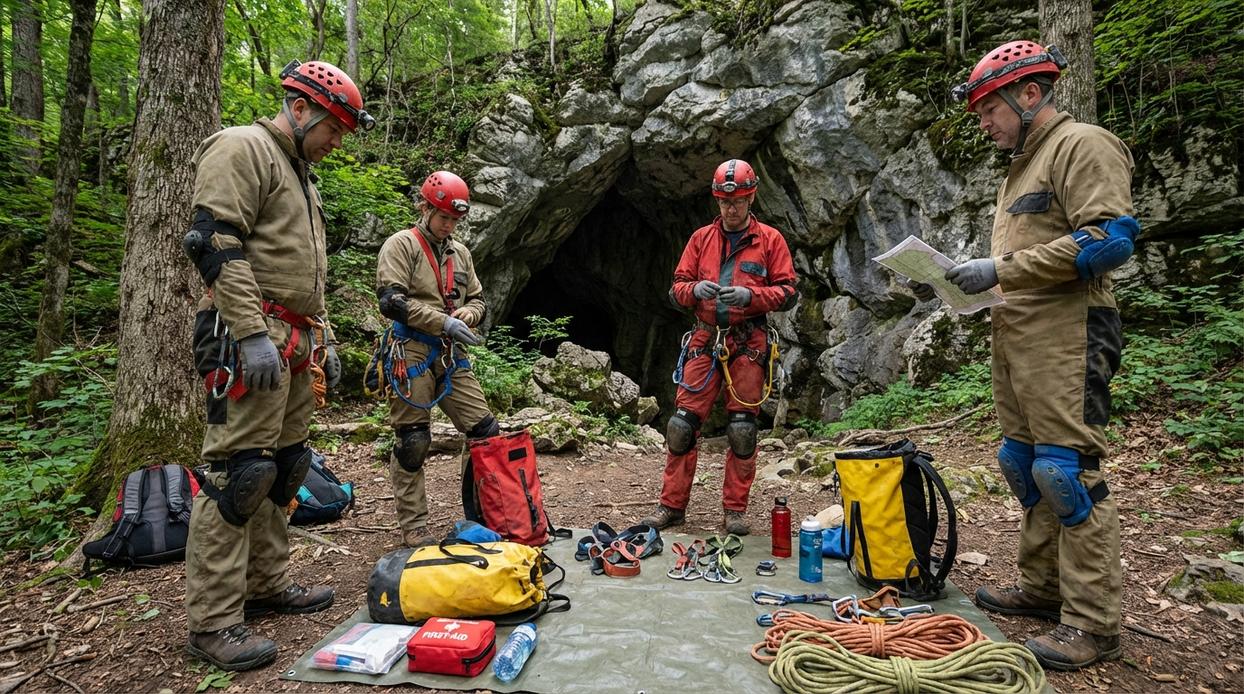
Going underground isn’t a scene from Indiana Jones, even if it feels epic. STAY CALM and build redundancy into your cave emergency planning. That starts with lighting systems: a durable LED headlamp as your primary beam, a backup headlamp for when batteries fail, and a small handheld flashlight as tertiary insurance. Think of it as the Stranger Things rule—never trust the dark.
Warmth matters because caves hover at constant, chilly temperatures that drain heat fast. Pack a lightweight emergency blanket, a non-cotton insulating layer like fleece (cotton steals warmth when wet), and a large heavy-duty trash bag for an improvised shelter or vapor barrier.
Navigation essentials are equally critical. Bring a physical, waterproofed map of the cave, a reliable compass, and non-permanent markers like flagging tape—remove every strip on exit. Pro tip: photograph the map before entry in case it’s lost. For deeper strategy, review understanding cave hazards and risk prevention techniques.
Finally, tailor first-aid for caving injuries: large bandages for abrasions, splinting materials for suspected fractures, antiseptic wipes to reduce infection risk, and blister treatment for long crawls. Some argue minimal kits keep packs light. But ounces saved won’t matter if you’re stranded. Balance weight with preparedness, and remember: this isn’t a TikTok challenge. Prepare smart, explore boldly, and exit safely. Redundancy, warmth, navigation, and medical readiness turn a potential headline into a controlled story you tell later over coffee, not a cautionary tale whispered online. Pack smart. Check twice. Always.
Responding to Crisis: What to Do When Things Go Wrong
When you’re underground, small problems can escalate quickly. The key is simple: slow down and respond with purpose.
Scenario 1: Total Light Failure
First, stop immediately. Don’t take another step. Sit down to prevent falls, steady your breathing, and resist the urge to fumble in the dark (panic wastes oxygen and energy). Then methodically access your backup light—this is why cave emergency planning always includes redundant lighting. Turn on your secondary source, check battery strength, and only then resume movement. If all lights fail, stay put and conserve energy while signaling companions.
Scenario 2: Becoming Disoriented or Lost
If passages start looking identical, use the S.T.O.P. method:
- Stop moving.
- Think about your last confirmed landmark.
- Observe airflow, footprints, or wall markings.
- Plan your next controlled move.
Avoid wandering aimlessly; that’s how minor confusion becomes a rescue headline. Instead, conserve energy and carefully retrace known ground. (Yes, this is the part where overconfidence usually backfires.)
Scenario 3: Medical Emergency
Begin with scene safety—check for loose rock or rising water. Next, stabilize the patient, prioritizing warmth to prevent hypothermia, which can set in quickly in damp caves (CDC notes that wet conditions accelerate heat loss). Finally, decide: can the group self-rescue safely, or is external help necessary? Make the call early, not after exhaustion sets in.
Scenario 4: Rising Water
Watch for warning signs: increasing flow rate, sudden debris, or a distant rumble. Move immediately to higher ground and identify the nearest safe exit. Water levels can rise faster than expected, so hesitation is your enemy.
Survival Mindset: Conserving Energy and Aiding Rescue
First, the waiting game is harder than it sounds. When I was immobilized during a cave trek, I wasted energy pacing and burning through my headlamp. Big mistake. If you’re stuck, conserve body heat and light. Huddle together, insulate from ground, and switch on beams when you hear rescuers. This is where cave emergency planning matters.
Next, signal smartly. Use universal rule of three—three whistle blasts, three flashes, or three shouts—then pause and repeat.
Finally, guard mindset. Fear spreads fast (faster than Wi-Fi in horror movie). Stay positive, assign tasks, and protect morale.
Emerge Wiser: Making Preparedness Your Priority
You now understand the cave emergencies; however, knowledge without action is trivia. The cave is unforgiving, and it punishes hesitation, ego, and half-packed kits. Many guides stop at gear lists. Instead, focus on cave emergency planning that integrates mindset and rehearsal.
To move from informed to prepared, follow this checklist:
- Audit redundancy: carry backup light, batteries, and navigation.
- Rehearse scenarios: practice lost-contact and injury drills.
- Establish decision triggers: define turnaround times and air limits.
Ultimately, preparation is clarity under pressure (and panic hates clarity). Before trip, review, refine, and practice together.
Be Ready Before You Go Underground
You came here to understand how to explore caves more safely and confidently—and now you have the foundational knowledge to do exactly that. From terrain analysis and navigation basics to survival priorities and gear considerations, you’re better equipped to handle the unpredictable nature of the underground world.
Cave environments don’t forgive hesitation or poor preparation. The real pain point for most trekkers isn’t the darkness—it’s uncertainty. Not knowing what to do when a route disappears, when conditions shift, or when something goes wrong is what turns adventure into danger.
That’s why cave emergency planning isn’t optional. It’s the difference between a controlled challenge and a preventable crisis.
Act on what you’ve learned. Review your gear checklist. Practice your navigation skills. Map your route in advance and share it with someone you trust. Turn preparation into habit before your next descent.
If you want step-by-step guidance that removes guesswork and helps you explore with confidence, dive deeper into our expert cave trekking resources today. Get the tools, strategies, and real-world insights that serious explorers rely on—so your next expedition is defined by discovery, not disaster.
 Janice Martinezelous has opinions about cave navigation and terrain analysis. Informed ones, backed by real experience — but opinions nonetheless, and they doesn't try to disguise them as neutral observation. They thinks a lot of what gets written about Cave Navigation and Terrain Analysis, Cave Trekking Basics and Survival Skills, Horizon Headlines is either too cautious to be useful or too confident to be credible, and they's work tends to sit deliberately in the space between those two failure modes.
Reading Janice's pieces, you get the sense of someone who has thought about this stuff seriously and arrived at actual conclusions — not just collected a range of perspectives and declined to pick one. That can be uncomfortable when they lands on something you disagree with. It's also why the writing is worth engaging with. Janice isn't interested in telling people what they want to hear. They is interested in telling them what they actually thinks, with enough reasoning behind it that you can push back if you want to. That kind of intellectual honesty is rarer than it should be.
What Janice is best at is the moment when a familiar topic reveals something unexpected — when the conventional wisdom turns out to be slightly off, or when a small shift in framing changes everything. They finds those moments consistently, which is why they's work tends to generate real discussion rather than just passive agreement.
Janice Martinezelous has opinions about cave navigation and terrain analysis. Informed ones, backed by real experience — but opinions nonetheless, and they doesn't try to disguise them as neutral observation. They thinks a lot of what gets written about Cave Navigation and Terrain Analysis, Cave Trekking Basics and Survival Skills, Horizon Headlines is either too cautious to be useful or too confident to be credible, and they's work tends to sit deliberately in the space between those two failure modes.
Reading Janice's pieces, you get the sense of someone who has thought about this stuff seriously and arrived at actual conclusions — not just collected a range of perspectives and declined to pick one. That can be uncomfortable when they lands on something you disagree with. It's also why the writing is worth engaging with. Janice isn't interested in telling people what they want to hear. They is interested in telling them what they actually thinks, with enough reasoning behind it that you can push back if you want to. That kind of intellectual honesty is rarer than it should be.
What Janice is best at is the moment when a familiar topic reveals something unexpected — when the conventional wisdom turns out to be slightly off, or when a small shift in framing changes everything. They finds those moments consistently, which is why they's work tends to generate real discussion rather than just passive agreement.