
Venturing into remote terrain offers unmatched beauty and solitude—but it also demands preparation, skill, and sharp awareness. If you’re searching for practical guidance on staying safe in wild landscapes, this article delivers exactly that. We break down essential strategies for navigating rugged environments, understanding animal behavior, and strengthening your backcountry wildlife awareness so you can explore with confidence rather than uncertainty.
Many outdoor enthusiasts underestimate how quickly conditions can change or how easily wildlife encounters can escalate without the right knowledge. That’s why this guide draws on proven survival principles, field-tested trekking practices, and insights aligned with experienced outdoor professionals who understand real-world backcountry risks.
Inside, you’ll learn how to read terrain effectively, recognize signs of nearby wildlife, reduce attractants in camp, and respond appropriately during encounters. Whether you’re new to cave trekking or expanding your wilderness skills, this resource is designed to help you prepare smarter and travel safer.
Beyond the Trailhead: A Guide to Responsible Wilderness Exploration
Remote landscapes pull us in with silence, dark skies, and the thrill of stepping where few have stood. But these places can punish the unprepared, and careless footsteps leave lasting scars.
This guide turns a simple hike into a responsible expedition.
Prepare deliberately:
- Research terrain, weather, and permits.
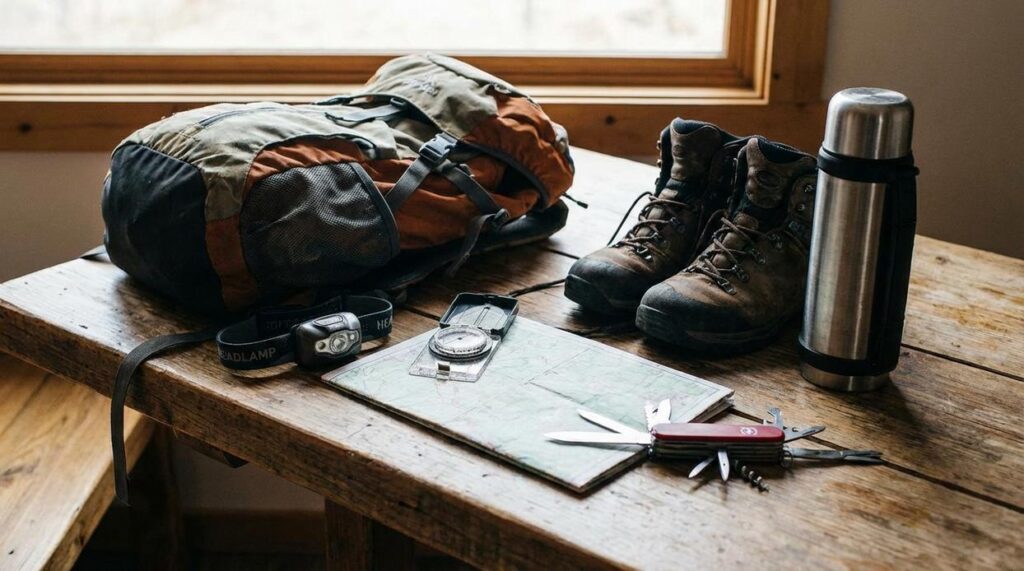
- Pack layers, navigation tools, and extra water.
- Share a route plan with someone home.
Practice backcountry wildlife awareness by storing food securely and observing animals from a distance.
Step-by-step, assess risks, minimize impact, and leave no trace. Adventure means responsibility. Protect wild places.
The Conservation Mindset: Protecting the Wilds You Love
Most people treat conservation like a checklist. I think that misses the point. The conservation mindset is about understanding the why behind every action.
Take “Leave No Trace.” It’s not just etiquette. In remote areas without infrastructure, a banana peel can take years to decompose in alpine climates (National Park Service). Food scraps alter soil chemistry and attract wildlife, disrupting natural foraging patterns. When animals become used to human food—a process called habituation—they lose healthy fear. That often ends badly for them, not us.
Backcountry wildlife awareness means:
- Keeping at least 100 yards from predators and 25 from other wildlife (U.S. Fish & Wildlife Service).
- Storing food in bear-resistant containers.
- Watching for stress signals like bluff charges, raised hackles, or alarm calls.
If an animal changes its behavior because of you, you’re too close. (Yes, even for the perfect photo.)
On multi-day treks, pack out everything—food scraps, wipes, hygiene products. Burying waste works only when done 6–8 inches deep and 200 feet from water (Leave No Trace Center for Outdoor Ethics). Anything else lingers.
Campsite choice matters more than fancy gear. I always choose durable surfaces—rock, gravel, dry grass—and avoid fragile vegetation and water edges. It’s less Instagram-worthy, maybe. But wild places aren’t backdrops. They’re living systems.
Blueprint for Safety: Pre-Trip Planning and Hazard Assessment
Adventure begins long before your boots hit the trail. A detailed trip plan—documenting your route, turnaround time, campsite locations, and emergency contacts—isn’t paranoia; it’s protocol. Search and rescue teams consistently report that clear itineraries reduce response times and improve outcomes (National Park Service). Share your plan with at least one trusted contact and set a firm check-in deadline. Pro tip: include vehicle description and license plate—small detail, big payoff.
Some argue that filing a trip plan “kills spontaneity.” However, freedom in the wild works best when anchored by structure (think jazz, not chaos). Preparation protects your flexibility.
Reading the Land Before It Reads You
Next, conduct terrain analysis using topographic maps and satellite imagery. Contour lines reveal elevation gain; tight spacing signals steep slopes, while V-shaped bends often mark river valleys. Satellite layers expose avalanche chutes, burn scars, and dense undergrowth. For example:
| Hazard संकेत | What to Look For | Why It Matters |
|---|---|---|
| River crossings | Narrow contour pinch points |
Fast currents, cold shock risk |
| Avalanche paths | Long, treeless corridors | Seasonal slide danger |
| Dense vegetation | Dark green canopy clusters | Slowed travel, hidden obstacles |
Meanwhile, research local fauna. Effective backcountry wildlife awareness means knowing bear spray range (typically 30 feet, per U.S. Fish & Wildlife Service), snake habitats, and food storage laws. Counterpoint: some hikers say wildlife encounters are rare. True—but rare doesn’t mean impossible.
Finally, check multiple weather sources. Mountain Forecast and NOAA often differ because elevation creates microclimates—rapid temperature drops, sudden storms, wind tunnels. In short, forecast at trailhead isn’t forecast at summit. And in the wild, details aren’t trivia; they’re survival.
Core Skills for Wilderness Self-Reliance
When you’re deep in the wild, self-reliance isn’t a vibe—it’s a system. Let’s start with the triangle of navigation: map, compass, and GPS/satellite device. A topographic map shows terrain features like elevation and water sources. A compass provides direction using magnetic north. A GPS or satellite device calculates your position via satellites. Used together, they cross-check one another. Relying only on electronics is a critical mistake—batteries die, signals fail, screens crack (usually at the worst possible moment). Pro tip: practice plotting coordinates on your map before you actually need to.
Next, shelter. Hypothermia—dangerously low body temperature—can happen even above freezing (CDC). Focus on three factors: location, insulation, weatherproofing. Choose high, dry ground away from wind tunnels and falling branches. Insulate yourself from the ground with leaves, pine boughs, or a sleeping pad. Then block wind and precipitation with a tarp, debris hut, or emergency bivy. In survival, comfort is secondary; heat retention is everything.
Water comes next. Dehydration impairs judgment quickly. You can filter, chemically treat, or boil water. Filters remove bacteria and protozoa but may not eliminate viruses. Chemical treatments (iodine or chlorine dioxide) are lightweight but require wait time. Boiling kills pathogens reliably (WHO), yet needs fuel and time. Ideally, combine methods when possible.
Finally, signaling. A whistle (three blasts for distress), signal mirror, and bright clothing are low-tech essentials. High-tech tools like Personal Locator Beacons (PLBs) transmit emergency signals via satellite. They’re lifesavers—but only if activated early.
And throughout it all, remember backcountry wildlife awareness. Prevention beats panic.
For deeper preparation strategies, review how to plan a multi day wilderness expedition safely: https://lerakutycave.com/how-to-plan-a-multi-day-wilderness-expedition-safely/.
Remote travel demands more than the classic Ten Essentials; it demands REDUNDANCY and durability.
For example, a robust first-aid kit with trauma dressings and blister care keeps issues from ending trips.
Pack multiple fire-starting methods—stormproof matches, a ferro rod, and a lighter—because cold hands happen (usually at dusk).
Reliable shelter, like a four-season tent or bivy, protects against exposure.
Clothing follows the layering system: base wicks moisture, mid insulates, shell blocks wind and rain.
Choose a backpack with suspension, hipbelt, and core capacity for balance.
Organize for access:
- Map, headlamp, beacon
- Water filter, snacks, backcountry wildlife awareness basics.
True mastery of the outdoors is not conquest; it’s preparedness paired with respect. The wilderness is unforgiving to the unprepared visitor and to the fragile ecosystems they disturb. Skills without ethics erode trails, spark rescues, and silence habitats. Ethics without skills invite avoidable risk. CHOOSE BOTH.
Before every trip, commit to:
• Practicing navigation, shelter-building, and backcountry wildlife awareness.
• Leaving campsites cleaner than you found them.
These habits protect you and preserve the wild for those who follow. Train deliberately, tread lightly, and make every footprint a promise to future generations. Start today, on every single adventure. You take.
Keep Exploring with Confidence and Clarity
You set out to better understand cave trekking, survival strategy, navigation, and terrain analysis—and now you have the foundational knowledge to move through rugged environments with greater confidence. From route planning to gear selection and backcountry wildlife awareness, you’re better prepared to face the real challenges that come with stepping beyond the trailhead.
The biggest risk in the wild isn’t the terrain itself—it’s being unprepared for it. Uncertainty about changing conditions, poor navigation decisions, or overlooked safety basics can turn an adventure into a setback. Acting on what you’ve learned is what keeps exploration empowering instead of overwhelming.
Now it’s time to put this knowledge into practice. Dive deeper into advanced trekking guides, refine your survival systems, and upgrade your outdoor strategy with trusted, field-tested insights. Join thousands of explorers who rely on our #1-rated outdoor resources for practical, real-world guidance.
Equip yourself smarter. Plan better. Explore farther. Start your next adventure prepared.
 Geristober Quevedo writes the kind of cave navigation and terrain analysis content that people actually send to each other. Not because it's flashy or controversial, but because it's the sort of thing where you read it and immediately think of three people who need to see it. Geristober has a talent for identifying the questions that a lot of people have but haven't quite figured out how to articulate yet — and then answering them properly.
They covers a lot of ground: Cave Navigation and Terrain Analysis, Cave Trekking Basics and Survival Skills, Horizon Headlines, and plenty of adjacent territory that doesn't always get treated with the same seriousness. The consistency across all of it is a certain kind of respect for the reader. Geristober doesn't assume people are stupid, and they doesn't assume they know everything either. They writes for someone who is genuinely trying to figure something out — because that's usually who's actually reading. That assumption shapes everything from how they structures an explanation to how much background they includes before getting to the point.
Beyond the practical stuff, there's something in Geristober's writing that reflects a real investment in the subject — not performed enthusiasm, but the kind of sustained interest that produces insight over time. They has been paying attention to cave navigation and terrain analysis long enough that they notices things a more casual observer would miss. That depth shows up in the work in ways that are hard to fake.
Geristober Quevedo writes the kind of cave navigation and terrain analysis content that people actually send to each other. Not because it's flashy or controversial, but because it's the sort of thing where you read it and immediately think of three people who need to see it. Geristober has a talent for identifying the questions that a lot of people have but haven't quite figured out how to articulate yet — and then answering them properly.
They covers a lot of ground: Cave Navigation and Terrain Analysis, Cave Trekking Basics and Survival Skills, Horizon Headlines, and plenty of adjacent territory that doesn't always get treated with the same seriousness. The consistency across all of it is a certain kind of respect for the reader. Geristober doesn't assume people are stupid, and they doesn't assume they know everything either. They writes for someone who is genuinely trying to figure something out — because that's usually who's actually reading. That assumption shapes everything from how they structures an explanation to how much background they includes before getting to the point.
Beyond the practical stuff, there's something in Geristober's writing that reflects a real investment in the subject — not performed enthusiasm, but the kind of sustained interest that produces insight over time. They has been paying attention to cave navigation and terrain analysis long enough that they notices things a more casual observer would miss. That depth shows up in the work in ways that are hard to fake.