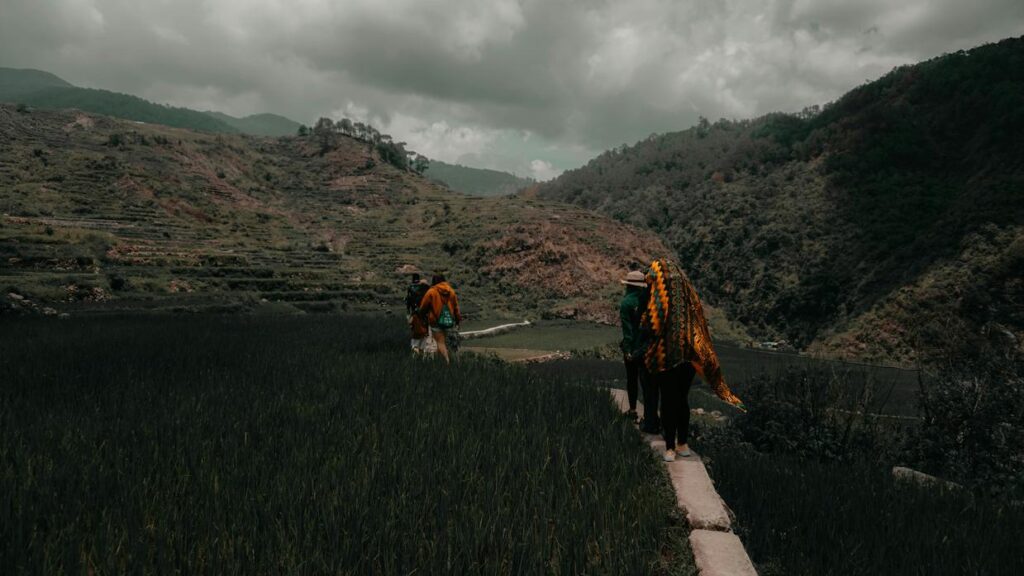

Interest in climate change expeditions is growing as more explorers, researchers, and outdoor enthusiasts seek firsthand insight into how shifting weather patterns are reshaping fragile environments. If you’re searching for clear, practical information on what these expeditions involve, how to prepare, and what challenges to expect, this guide delivers exactly that. We break down essential cave and terrain navigation skills, survival fundamentals, gear considerations, and environmental awareness strategies needed for extreme and rapidly changing conditions. Rather than relying on speculation, this article draws on field-tested outdoor practices, proven navigation techniques, and real-world expedition principles used in demanding environments. You’ll gain a grounded understanding of how to assess terrain risks, adapt to unpredictable climates, and equip yourself responsibly. Whether you’re planning an expedition or simply want to understand the realities behind these journeys, this resource provides reliable, experience-based insights to help you move forward with confidence.
The Modern Research Frontier: From Glacial Peaks to Oceanic Trenches
1. Ice Core Drilling in Antarctica
“Listen for the hollow sound,” a field glaciologist once said over the radio. “That’s how you know you’re above a crevasse.” In Antarctica, extracting ice cores—cylinders of compacted snow and ice that preserve ancient air bubbles—requires more than a drill. These frozen layers hold atmospheric records stretching back 800,000 years (European Project for Ice Coring in Antarctica, EPICA). But before drilling begins, teams conduct terrain analysis using ground-penetrating radar to detect hidden fractures beneath seemingly solid snow (a reminder that flat doesn’t mean safe). Stable sites are chosen based on ice flow rates and minimal surface stress to prevent core distortion.
2. Amazon Rainforest Carbon Monitoring
In the Amazon, researchers establish permanent plots to measure carbon sequestration—the process by which trees absorb and store carbon dioxide. “You don’t walk in a straight line here,” one ecologist joked. “The forest decides.” Dense canopy cover disrupts GPS, and unmapped terrain demands compass navigation and survival skills. According to NASA, tropical forests absorb roughly 7.6 billion metric tons of CO₂ annually. Weeks in isolation require strict protocols aligned with new wilderness safety regulations every explorer should know (https://lerakutycave.com/new-wilderness-safety-regulations-every-explorer-should-know/).
3. Deep-Sea Argo Floats and Submersibles
More than 3,000 Argo floats drift through the oceans, measuring temperature and salinity to depths of 2,000 meters (NOAA). “Once it drops, you trust the engineering,” an ocean technician explained. Deploying these instruments in extreme pressure zones demands precision timing and current modeling. Manned submersibles go deeper still, documenting acidification and warming trends central to climate change expeditions. At crushing pressures exceeding 400 atmospheres, even minor miscalculations can jeopardize retrieval (and nobody wants a multimillion-dollar probe lost to a rogue current).
The Scientist’s Toolkit: Essential Gear for Extreme Environments

When your “office” is a glacier, rainforest, or windswept desert, preparation isn’t optional—it’s survival. The right toolkit doesn’t just support research; it keeps you alive long enough to finish it.
Personal Survival Systems
Start with multi-layer thermal clothing for polar missions. Layering—wearing moisture-wicking base layers, insulating mid-layers, and windproof shells—traps heat while releasing sweat (because freezing and overheating can happen in the same hour). According to the CDC, hypothermia risk increases rapidly in wet, windy conditions below 40°F. Choose merino wool or synthetic fibers over cotton. Pro tip: always pack an extra dry base layer in a waterproof compression bag.
For jungle expeditions, invest in a reliable water purification system. Portable pump filters and UV purifiers remove bacteria and protozoa that cause illnesses like giardiasis (CDC). And everywhere—yes, everywhere—carry an emergency locator beacon. These devices transmit distress signals via satellite networks such as COSPAS-SARSAT, dramatically improving rescue times.
Data Collection Technology
Serious environments demand serious tools. Ground-penetrating radar maps bedrock beneath ice sheets, essential for climate change expeditions. Portable mass spectrometers analyze air samples on-site, identifying trace gases in real time. Pair both with satellite data links to transmit findings instantly (because hiking out with a USB drive isn’t practical).
Mobility and Logistics
Choose transport strategically: ice-strengthened research vessels for polar seas, ski-equipped aircraft for remote snowfields, inflatable Zodiacs for coastal landings, and all-terrain vehicles for rugged terrain. Mobility isn’t a luxury—it’s your lifeline when conditions shift without warning.
Beyond the Data: The Human Element of Climate Science
When people picture field research, they often imagine satellites and supercomputers. Yet on the ground, success depends on very human skills.
First, consider advanced navigation. In polar regions or trackless deserts, GPS can drift, batteries die, and landmarks vanish overnight. Teams rely on layered systems: digital coordinates, satellite imagery, and old-school map-and-compass triangulation. This redundancy—meaning multiple tools backing each other up—keeps researchers oriented when sea ice fractures or storms erase tracks. Pro tip: always log manual bearings, even when the screen looks fine.
Next comes wilderness first aid. Because evacuation may take days, every member trains to stabilize hypothermia (a dangerous drop in core body temperature), splint fractures, and manage shock. Standard protocols include:
- Immediate shelter setup
- Controlled rewarming procedures
- Clear radio check-ins with base support
These steps sound simple, but under biting wind and fading light, discipline saves lives.
Equally critical is mental fortitude. Isolation, darkness, and constant risk test patience and judgment. Teams heading into climate change expeditions often rehearse high-stress scenarios beforehand, building what psychologists call resilience—the capacity to recover quickly from difficulty. Strong communication norms and defined leadership roles prevent small tensions from snowballing.
So what’s next if you’re preparing for similar work? Beyond gear lists, invest in scenario training, conflict-resolution practice, and navigation refreshers. After all, data collection is only possible when people function well together (and keep their fingers warm enough to hold the instruments). Preparation turns uncertainty into managed risk consistently.
Ready for Your Next Descent
You came here to better understand the realities of cave trekking, terrain analysis, and preparing for unpredictable underground conditions. Now you have a clearer picture of how to navigate safely, choose reliable gear, and respond confidently when the environment shifts around you.
Cave exploration isn’t forgiving. Poor preparation, weak navigation skills, or the wrong equipment can quickly turn excitement into danger. That uncertainty—the fear of getting disoriented, underprepared, or caught off guard—is exactly what holds many adventurers back.
The solution is simple: train smarter, study the terrain before you step inside, and approach every expedition with a survival-first mindset. Whether you’re planning local cave routes or preparing for climate change expeditions, your edge comes from knowledge, preparation, and disciplined execution.
If you’re serious about exploring with confidence, start applying these strategies on your next trip. Review your gear checklist, practice navigation techniques, and deepen your understanding of terrain behavior before you descend.
Thousands of outdoor enthusiasts rely on proven trekking frameworks and field-tested survival strategies to reduce risk and maximize adventure. Don’t leave your safety to chance—equip yourself with the right knowledge, refine your skills, and take your next step underground with confidence.
 Janice Martinezelous has opinions about cave navigation and terrain analysis. Informed ones, backed by real experience — but opinions nonetheless, and they doesn't try to disguise them as neutral observation. They thinks a lot of what gets written about Cave Navigation and Terrain Analysis, Cave Trekking Basics and Survival Skills, Horizon Headlines is either too cautious to be useful or too confident to be credible, and they's work tends to sit deliberately in the space between those two failure modes.
Reading Janice's pieces, you get the sense of someone who has thought about this stuff seriously and arrived at actual conclusions — not just collected a range of perspectives and declined to pick one. That can be uncomfortable when they lands on something you disagree with. It's also why the writing is worth engaging with. Janice isn't interested in telling people what they want to hear. They is interested in telling them what they actually thinks, with enough reasoning behind it that you can push back if you want to. That kind of intellectual honesty is rarer than it should be.
What Janice is best at is the moment when a familiar topic reveals something unexpected — when the conventional wisdom turns out to be slightly off, or when a small shift in framing changes everything. They finds those moments consistently, which is why they's work tends to generate real discussion rather than just passive agreement.
Janice Martinezelous has opinions about cave navigation and terrain analysis. Informed ones, backed by real experience — but opinions nonetheless, and they doesn't try to disguise them as neutral observation. They thinks a lot of what gets written about Cave Navigation and Terrain Analysis, Cave Trekking Basics and Survival Skills, Horizon Headlines is either too cautious to be useful or too confident to be credible, and they's work tends to sit deliberately in the space between those two failure modes.
Reading Janice's pieces, you get the sense of someone who has thought about this stuff seriously and arrived at actual conclusions — not just collected a range of perspectives and declined to pick one. That can be uncomfortable when they lands on something you disagree with. It's also why the writing is worth engaging with. Janice isn't interested in telling people what they want to hear. They is interested in telling them what they actually thinks, with enough reasoning behind it that you can push back if you want to. That kind of intellectual honesty is rarer than it should be.
What Janice is best at is the moment when a familiar topic reveals something unexpected — when the conventional wisdom turns out to be slightly off, or when a small shift in framing changes everything. They finds those moments consistently, which is why they's work tends to generate real discussion rather than just passive agreement.