If you’re searching for clear, practical guidance on cave trekking, survival skills, and understanding challenging terrain, you’re in the right place. Exploring caves and remote landscapes demands more than curiosity—it requires preparation, navigation know‑how, and the right gear to stay safe in unpredictable environments.
This article delivers exactly that. You’ll gain foundational cave trekking basics, essential survival strategies, and terrain analysis techniques that help you read your surroundings with confidence. We also break down practical outdoor gear tips so you can make informed decisions before heading underground or into rugged terrain.
Beyond skills and equipment, we highlight the importance of responsible exploration and how it connects to broader global conservation initiatives, ensuring that fragile ecosystems are protected for future adventurers.
Our guidance is grounded in field-tested outdoor practices, established navigation principles, and widely recognized safety standards—so you can explore smarter, safer, and with greater respect for the natural world.
From climate accords to wildlife treaties, global conservation initiatives form a coordinated safety net for the planet. The Paris Agreement, adopted by 196 parties in 2015, commits nations to limit warming to well below 2°C—protecting coastlines, crops, and communities (UNFCCC). The Convention on Biological Diversity sets measurable targets for habitat preservation, directly benefiting food security and medicine discovery. Key feature: transparent reporting requirements, which hold governments accountable. Critics argue these frameworks lack enforcement teeth. True, penalties can be weak—but shared standards mobilize funding, data sharing, and innovation at scale. Collective action turns scattered efforts into measurable environmental gains worldwide today.
The Global Framework for Climate Action: The Paris Agreement and Beyond
Have you ever wondered how nearly every country on Earth agreed on a shared climate goal? The Paris Agreement is that landmark pact, aiming to limit global warming to well below 2°C above pre-industrial levels—and ideally to 1.5°C. That half-degree difference isn’t trivial; the IPCC warns that exceeding 1.5°C significantly increases risks of extreme heat, sea-level rise, and biodiversity loss (IPCC, 2018).
But how does it actually work?
Instead of imposing top-down mandates, the agreement relies on Nationally Determined Contributions (NDCs)—country-specific climate plans outlining post-2020 emissions cuts and adaptation strategies. Each nation sets its own targets, then updates them every five years (a built-in accountability loop).
The process operates under the UNFCCC (United Nations Framework Convention on Climate Change), the parent treaty that convenes annual COP meetings—think of them as the world’s climate summit series, where pledges are debated, refined, and sometimes dramatically negotiated.
Real-world impact shows up in tangible ways:
- Massive investments in renewable energy like wind and solar
- Phasing out fossil fuel subsidies
- Expanding carbon markets that price emissions
Skeptics argue pledges lack enforcement. Fair point. Yet supporters counter that transparency, peer pressure, and global conservation initiatives create momentum that didn’t exist before. So the question is: would imperfect cooperation be worse than no cooperation at all?
Defending Life on Earth: Biodiversity and Ecosystem Conservation Programs
In December 2022, nearly every nation on Earth agreed to a plan that feels straight out of an Avengers-style team-up: the Kunming-Montreal Global Biodiversity Framework. Adopted under the Convention on Biological Diversity (CBD), it centers on the ambitious “30×30” target—protecting 30% of the planet’s land and oceans by 2030. In plain terms, that means setting aside nearly a third of Earth for nature (no small feat in a world addicted to expansion). Critics argue it’s unrealistic, pointing to economic pressures and land-use conflicts. But supporters counter that protecting ecosystems now prevents far higher costs from climate disasters and food insecurity later (see UNEP, 2023).
On the front lines, organizations like the International Union for Conservation of Nature (IUCN) maintain the Red List of Threatened Species, a global database that classifies species’ extinction risk. Think of it as nature’s health chart. Meanwhile, the World Wide Fund for Nature (WWF) funds habitat restoration and anti-poaching programs worldwide.
Protected areas are the backbone of these global conservation initiatives. Marine Protected Areas (MPAs) restrict fishing and drilling to allow ocean ecosystems to recover, while national parks safeguard forests, wetlands, and grasslands. Some argue parks limit local development. Yet evidence shows well-managed parks boost ecotourism and long-term economic resilience (World Bank, 2022).
Species-specific efforts matter too. Anti-poaching patrols protect rhinos and elephants from illegal wildlife trade, and international flyway agreements conserve migratory birds across continents—like coordinated pit stops on a planetary road trip.
If you’re inspired to explore responsibly, check out top adventure travel trends shaping exploration in 2026 to see how conservation and exploration increasingly go hand in hand.
Cleaning Our World: Initiatives Targeting Pollution and Waste

First, consider the scale of plastic pollution. The United Nations estimates that more than 400 million tons of plastic are produced each year, with roughly 19–23 million tons leaking into aquatic ecosystems annually (UNEP, 2023). In response, the United Nations Environment Assembly agreed to negotiate a legally binding treaty addressing the full lifecycle of plastic—from production to disposal. “Lifecycle” here means every stage a product passes through, not just what happens after you toss it away (out of sight is not out of ocean).
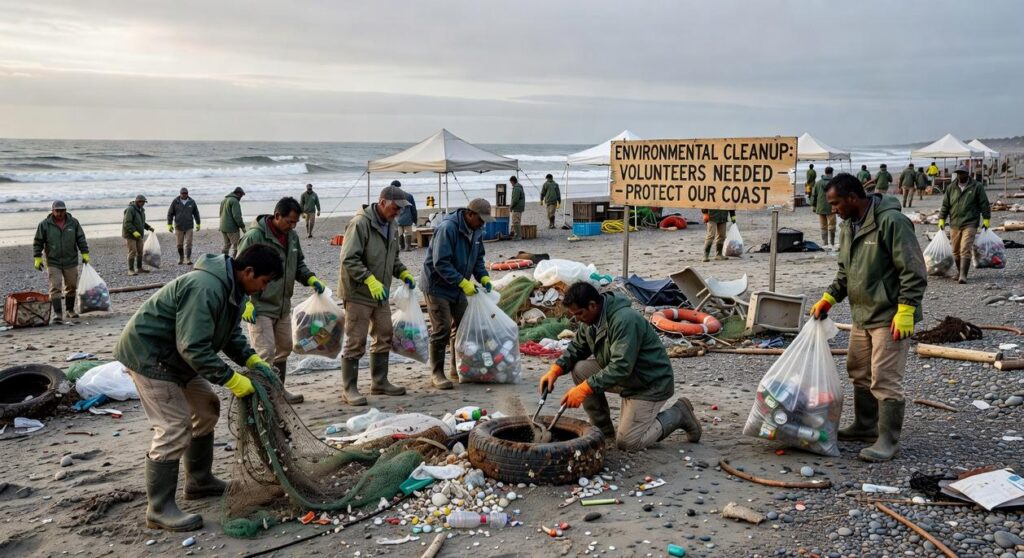
Meanwhile, ocean and coastal cleanup programs provide measurable proof that action works. The Ocean Conservancy’s International Coastal Cleanup has engaged over 17 million volunteers since its launch, removing more than 350 million pounds of trash worldwide. Not only does this effort clear beaches, but it also generates citizen-science data used to shape waste policies. Think of it as environmental Avengers—minus the capes, plus trash bags.
Equally important, combating deforestation remains central to global conservation initiatives. The UN-REDD Programme supports developing nations in reducing emissions from forest loss. Since forests absorb about 2.6 billion tons of CO2 annually (FAO), protecting them is climate strategy, not sentiment. Pro tip: supporting certified sustainable products reduces deforestation pressure at the source.
A Blueprint for a Better Future: The UN Sustainable Development Goals (SDGs)
The 17 UN Sustainable Development Goals (SDGs) are a universal call to action to END POVERTY, protect the planet, and ensure shared prosperity. Think of them as a global checklist—covering everything from quality education to clean energy—designed so progress in one area strengthens another.
Spotlight on Environmental Goals
Three goals anchor the environmental framework:
- SDG 13: Climate Action — cutting greenhouse gas emissions and building resilience.
- SDG 14: Life Below Water — protecting oceans from pollution and overfishing.
- SDG 15: Life on Land — conserving forests, soil, and biodiversity.
Here’s the PRACTICAL takeaway: protecting forests (SDG 15) isn’t just about trees. Healthy forests filter water (supporting SDG 6), store carbon (SDG 13), and create sustainable jobs like eco-tourism (SDG 8). It’s ecological teamwork (nature’s version of the Avengers).
You can contribute by:
• Supporting certified sustainable products
• Volunteering with local global conservation initiatives
Small, CONSISTENT actions scale into worldwide impact.
Environmental challenges can feel overwhelming, but a vast network of global conservation initiatives is already at work turning plans into progress. When you understand these coordinated efforts, helplessness shifts into momentum. You’re not starting from scratch—you’re joining a movement.
Here’s what’s in it for you:
- A chance to protect places you love
- Practical skills through citizen science projects
- A stronger voice when advocating for national policies aligned with global goals
By connecting with local chapters and participating on the ground, you gain community, purpose, and real-world impact. Collective action doesn’t just change ecosystems—it changes you. Get involved.
Step Into the Cave With Confidence
You came here to better understand cave trekking, terrain awareness, and the survival skills that keep explorers safe beneath the surface. Now you have a clearer path forward — from reading rock formations and navigating underground passages to preparing the right gear for unpredictable conditions.
Cave environments are unforgiving. Poor preparation, weak navigation skills, or the wrong equipment can quickly turn adventure into danger. But with the right knowledge and a disciplined approach, you can explore confidently while supporting global conservation initiatives that protect these fragile underground ecosystems.
Adventure should challenge you — not put you at risk. If you’re ready to strengthen your cave trekking skills, sharpen your terrain analysis, and choose gear that won’t fail when it matters most, start applying these techniques on your next expedition.
Don’t leave safety to chance. Equip yourself with proven strategies, reliable preparation methods, and field-tested insights trusted by serious outdoor explorers. Your next descent starts with the decisions you make today.
 Geristober Quevedo writes the kind of cave navigation and terrain analysis content that people actually send to each other. Not because it's flashy or controversial, but because it's the sort of thing where you read it and immediately think of three people who need to see it. Geristober has a talent for identifying the questions that a lot of people have but haven't quite figured out how to articulate yet — and then answering them properly.
They covers a lot of ground: Cave Navigation and Terrain Analysis, Cave Trekking Basics and Survival Skills, Horizon Headlines, and plenty of adjacent territory that doesn't always get treated with the same seriousness. The consistency across all of it is a certain kind of respect for the reader. Geristober doesn't assume people are stupid, and they doesn't assume they know everything either. They writes for someone who is genuinely trying to figure something out — because that's usually who's actually reading. That assumption shapes everything from how they structures an explanation to how much background they includes before getting to the point.
Beyond the practical stuff, there's something in Geristober's writing that reflects a real investment in the subject — not performed enthusiasm, but the kind of sustained interest that produces insight over time. They has been paying attention to cave navigation and terrain analysis long enough that they notices things a more casual observer would miss. That depth shows up in the work in ways that are hard to fake.
Geristober Quevedo writes the kind of cave navigation and terrain analysis content that people actually send to each other. Not because it's flashy or controversial, but because it's the sort of thing where you read it and immediately think of three people who need to see it. Geristober has a talent for identifying the questions that a lot of people have but haven't quite figured out how to articulate yet — and then answering them properly.
They covers a lot of ground: Cave Navigation and Terrain Analysis, Cave Trekking Basics and Survival Skills, Horizon Headlines, and plenty of adjacent territory that doesn't always get treated with the same seriousness. The consistency across all of it is a certain kind of respect for the reader. Geristober doesn't assume people are stupid, and they doesn't assume they know everything either. They writes for someone who is genuinely trying to figure something out — because that's usually who's actually reading. That assumption shapes everything from how they structures an explanation to how much background they includes before getting to the point.
Beyond the practical stuff, there's something in Geristober's writing that reflects a real investment in the subject — not performed enthusiasm, but the kind of sustained interest that produces insight over time. They has been paying attention to cave navigation and terrain analysis long enough that they notices things a more casual observer would miss. That depth shows up in the work in ways that are hard to fake.