

Planning your first cave trek—or looking to sharpen your backcountry skills—can feel overwhelming. Between unpredictable terrain, shifting weather conditions, and the need for reliable gear, there’s a lot to get right before you step underground or deep into the wild. This guide is designed to give you clear, practical insights into cave trekking basics, survival techniques, navigation strategies, terrain analysis, and waterproofing outdoor gear so you can prepare with confidence.
If you’re searching for trustworthy, experience-backed outdoor guidance, you’re in the right place. We draw from real-world trekking scenarios, field-tested survival methods, and proven gear practices to ensure the information you’re reading is both accurate and actionable.
In this article, you’ll learn how to assess cave environments, move safely across challenging landscapes, choose dependable equipment, and protect yourself against the unexpected—so every adventure starts prepared and ends safely.
One minute the sky is clear; the next, a downpour turns your dream hike into a shivering slog. I’ve watched trekkers go from confident to miserable in under ten minutes. The culprit isn’t bad luck—it’s water infiltration, meaning moisture forcing its way through seams, zippers, and fabric pores. Once inside, it strips insulation, degrades materials, and can trigger hypothermia (when your core temperature drops below 95°F, per CDC).
Here’s my recommendation: treat waterproofing outdoor gear as a system, not a spray-and-pray fix. Seal seams, refresh DWR coatings, pack dry bags for electronics, and pressure-test at home. Test before you trust.
Decoding the Jargon: What Waterproof Ratings Actually Mean
Once you’ve learned how to effectively waterproof your outdoor gear, don’t forget to check out our guide on How to Properly Clean and Store Hiking Boots to ensure they remain in top condition for your next adventure.
Let’s start with Hydrostatic Head (HH). This rating measures how much water pressure a fabric can handle before it leaks. Imagine a tall tube sitting on your tent fabric. The higher the water column (measured in millimeters), the more pressure it exerts. A 1,500mm HH rating means the fabric can withstand a 1.5‑meter column of water before droplets push through. For steady rain, 2,000–3,000mm is common. Mountaineering tents? Often 5,000mm+ (because mountains don’t do “light drizzle”).
Now, the big confusion: water-resistant vs. waterproof. Water-resistant shrugs off light showers. Waterproof forms a true barrier against sustained rain. If you’ve ever biked home in a “water-resistant” jacket during a downpour, you already know the difference.
For electronics, IP ratings (Ingress Protection) matter. IPX7 means protection against immersion up to 1 meter for 30 minutes. IP68 typically means deeper or longer submersion and full dust protection. The first digit covers solids (dust), the second liquids.
But here’s the twist: breathability. A jacket can block rain yet trap sweat. That’s where Moisture Vapor Transmission Rate (MVTR) comes in—how well fabric lets perspiration escape. Without it, you’re soaked from the inside (ironic, right?).
Speculation: As materials science evolves, expect smarter membranes that dynamically adjust airflow—huge for waterproofing outdoor gear. Pro tip: match ratings to your actual conditions, not worst-case fantasies.
The First Line of Defense: A Step-by-Step Guide to Treating Fabrics
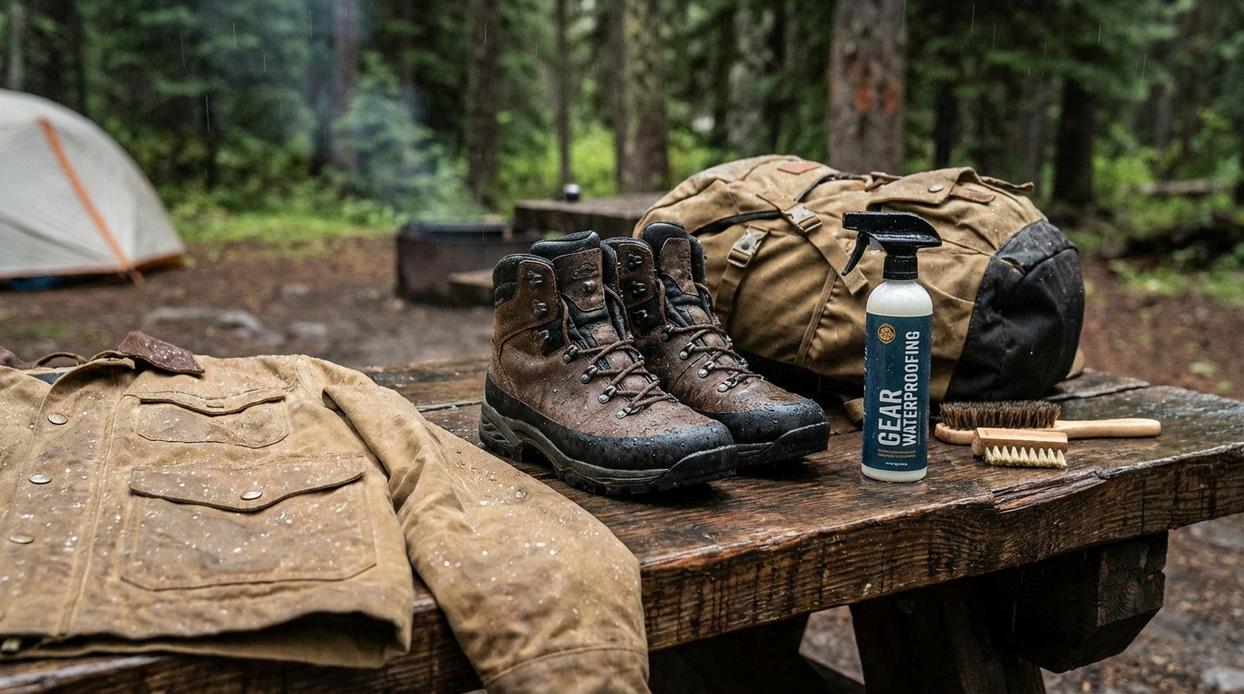
Before you buy new gear, start with cleaning. Dirt, body oils, and campfire smoke don’t just make fabric grimy—they clog microscopic pores (tiny openings that allow breathability) and slowly degrade factory coatings. According to REI Co-op care guides, contaminants can reduce waterproof performance significantly over time. In other words, that “leak” might just be yesterday’s trail dust.
Use a technical fabric cleaner (not regular detergent—it leaves residue). Wash on gentle, rinse twice, and air dry unless the label says otherwise.
Reapply DWR the Right Way
DWR (Durable Water Repellent) is the outer coating that makes water bead instead of soak.
- Spray-on DWR: Best for jackets; target high-wear zones like shoulders.
- Wash-in DWR: Good for full-garment treatment but may reduce breathability slightly.
After applying, heat-set in a dryer on low (if permitted). Heat reactivates bonding polymers (the chemical chains that repel water). No heat? No activation. Think of it like baking cookies—skip the oven, skip the magic.
Some argue factory coatings last for years. Sometimes they do. But if water stops beading, performance has already dropped.
Don’t Skip Seam Sealing
Seams are stitched—stitched means holes. Inspect tape inside tents and rain shells. If it’s flaking:
- Gently remove old tape
- Clean residue with isopropyl alcohol
- Apply liquid seam sealer evenly
Miss this step and your “waterproof” shelter becomes a colander.
Boots: Leather vs. Synthetic
Leather boots need wax or oil to nourish fibers and prevent cracking. Synthetic boots respond better to spray treatments. Treat them differently—like cast iron vs. nonstick.
If you’re serious about waterproofing outdoor gear, schedule maintenance alongside your seasonal gear checklists to extend equipment lifespan.
What’s next? Store gear dry, recheck seams mid-season, and test waterproofing with a shower spray before your next trip (better your bathroom than a mountain storm).
Fortifying your pack starts with redundant waterproofing—meaning you never trust a single thin barrier between your essentials and a cold, creeping flood. In a cave or on a rain-lashed trail, water doesn’t just drip; it seeps, pools, and presses like icy fingers against fabric. So first, commit to the non‑negotiable tool: the dry bag. Slide in your sleep system, squeeze out the air, then seal it with the three-roll rule—fold the top down three tight times before clipping. You should feel the stiff ridge lock shut. Use different sizes for compartmentalization: one bag for insulation, one for electronics, one for spare layers.
Next, add a waterproof pack liner as your primary internal shield. Even if your backpack fabric wets out and turns dark and heavy, the liner keeps the inside dry and faintly warm. Think of it as the raincoat beneath the jacket.
Finally, protect delicate gear with hard-shell waterproof cases. Cameras, GPS units, satellite communicators—they deserve armor that snaps closed with a reassuring click (very Batman utility belt). Pro tip: test your system at home in a shower before trusting it in the wild. That’s real waterproofing outdoor gear discipline. Because dry equals safe, warm, and functional in adversity.
On-the-Trail Repairs: How to Fix Leaks in the Field
A minimalist repair kit beats a bulky “just in case” bag every time. Essentials vs. extras:
- Tenacious Tape – instant patches for tears (fast, no cure time)
- Seam Grip – stronger, flexible sealant (slower, but tougher)
- Alcohol wipes – prep surface so patches actually stick
That’s it. Leave the duct tape roll at home.
Patch a Tear Fast
Tape vs. glue? Tape wins in rain; Seam Grip wins for durability.
- Wipe and dry the area.
- Apply Tenacious Tape, rounding corners.
- Press firmly for 30–60 seconds.
- For bigger rips, seal edges later with Seam Grip.
Finding the Leak in a Storm
Drips from the ceiling? Check seams. Wet walls? Likely condensation. Mystery puddle? Inspect the footprint alignment. (Yes, even pros skip that step.)
Drying Gear Safely
- Fire heat vs. air drying: Choose airflow; flames delaminate fabric.
- Use body heat for socks or gloves inside your jacket.
Smart field repairs keep waterproofing outdoor gear effective—MacGyver style, minus the explosions.
Your Pre-Trip Waterproofing Checklist
Before you head out, remember this: most soggy sleeping bags and fried headlamps aren’t product failures—they’re maintenance failures. In other words, the problem usually starts at home, not on the trail.
First, inspect seams. Turn gear inside out and look for peeling tape or tiny gaps; reseal if needed. Next, test DWR (Durable Water Repellent)—sprinkle water on your jacket. If it soaks in instead of beading, retreat it. Then pack liners in your backpack. Finally, compartmentalize electronics in dry bags.
Waterproofing outdoor gear isn’t optional. Make this quick audit part of every trip routine.
Ready for Your Next Cave Adventure?
You set out to understand the essentials of cave trekking, navigation, terrain awareness, and gear preparation—and now you have a clearer path forward. From reading underground landscapes to sharpening survival instincts, you’re better equipped to step into the unknown with confidence.
But preparation is what separates a thrilling adventure from a risky mistake. One overlooked detail—like waterproofing outdoor gear—can mean the difference between staying safe and cutting your trip short. Moisture, rough terrain, and unpredictable cave conditions demand gear that performs when it matters most.
Here’s your next move: review your current setup, upgrade weak points, and apply what you’ve learned before your next expedition. Thousands of outdoor explorers rely on our proven cave trekking insights and practical gear strategies to stay prepared and protected.
Don’t leave your safety to chance. Get fully prepared, strengthen your skills, and make your next cave journey your most confident one yet.
 Geristober Quevedo writes the kind of cave navigation and terrain analysis content that people actually send to each other. Not because it's flashy or controversial, but because it's the sort of thing where you read it and immediately think of three people who need to see it. Geristober has a talent for identifying the questions that a lot of people have but haven't quite figured out how to articulate yet — and then answering them properly.
They covers a lot of ground: Cave Navigation and Terrain Analysis, Cave Trekking Basics and Survival Skills, Horizon Headlines, and plenty of adjacent territory that doesn't always get treated with the same seriousness. The consistency across all of it is a certain kind of respect for the reader. Geristober doesn't assume people are stupid, and they doesn't assume they know everything either. They writes for someone who is genuinely trying to figure something out — because that's usually who's actually reading. That assumption shapes everything from how they structures an explanation to how much background they includes before getting to the point.
Beyond the practical stuff, there's something in Geristober's writing that reflects a real investment in the subject — not performed enthusiasm, but the kind of sustained interest that produces insight over time. They has been paying attention to cave navigation and terrain analysis long enough that they notices things a more casual observer would miss. That depth shows up in the work in ways that are hard to fake.
Geristober Quevedo writes the kind of cave navigation and terrain analysis content that people actually send to each other. Not because it's flashy or controversial, but because it's the sort of thing where you read it and immediately think of three people who need to see it. Geristober has a talent for identifying the questions that a lot of people have but haven't quite figured out how to articulate yet — and then answering them properly.
They covers a lot of ground: Cave Navigation and Terrain Analysis, Cave Trekking Basics and Survival Skills, Horizon Headlines, and plenty of adjacent territory that doesn't always get treated with the same seriousness. The consistency across all of it is a certain kind of respect for the reader. Geristober doesn't assume people are stupid, and they doesn't assume they know everything either. They writes for someone who is genuinely trying to figure something out — because that's usually who's actually reading. That assumption shapes everything from how they structures an explanation to how much background they includes before getting to the point.
Beyond the practical stuff, there's something in Geristober's writing that reflects a real investment in the subject — not performed enthusiasm, but the kind of sustained interest that produces insight over time. They has been paying attention to cave navigation and terrain analysis long enough that they notices things a more casual observer would miss. That depth shows up in the work in ways that are hard to fake.