If you’re searching for practical, real-world guidance on cave trekking, survival skills, and navigating rugged terrain, you’re in the right place. Whether you’re planning your first underground exploration or looking to sharpen your backcountry awareness, this article delivers clear, field-tested insights you can actually use.
Cave environments and remote landscapes demand more than enthusiasm—they require preparation, sound judgment, and the right gear. Here, you’ll find foundational trekking basics, smart navigation strategies, terrain analysis tips, and essential outdoor equipment guidance designed to help you explore with confidence.
We’ve studied proven survival methods, analyzed real expedition scenarios, and drawn from established outdoor best practices to ensure the information you’re reading is practical, reliable, and safety-focused.
You’ll also discover micro-adventure ideas that make it easier to build skills close to home before committing to more demanding terrain. If your goal is to explore smarter, safer, and more confidently, this guide is built to help you do exactly that.
Start Close to Home
Adventure doesn’t require Everest-level logistics. I believe we overcomplicate exploration, assuming it demands flights, permits, and weeks off work. In reality, a micro-adventure—short, local, purpose-driven outing—can reset your perspective. For example, try micro-adventure ideas like a sunrise summit hike, an urban navigation challenge, a backyard bivouac, or a riverbank foraging walk. Moreover, small trips build real skills—map reading, terrain analysis, risk assessment. Some argue it’s not “real” adventure. I disagree. Consistency beats spectacle (Indiana Jones started somewhere, right?). So this weekend, step outside, set a simple objective, and treat your backyard like uncharted territory. Adventure begins where excuses end. Today.
The Micro-Hike: Mastering Local Trails
You don’t need a remote mountain range to build real outdoor skill. A 1–3 hour hike through a nearby state park, city greenway, or nature preserve can sharpen your instincts just as effectively (minus the epic Instagram backdrop). The key is intention.
Start with terrain analysis. Before leaving home, study the trail map. Look for elevation gain (the total vertical climb over the hike), water crossings, and landmarks like ridgelines or junctions. Elevation gain matters because even 500 feet can feel strenuous over a short distance. This small planning ritual transforms a casual walk into a deliberate excursion.
Some argue that short hikes don’t “count” as real training. But skill comes from repetition, not remoteness. Practicing close to home lowers risk while increasing consistency. Think of it as rehearsal before opening night.
Essential Gear (Non-Negotiable):
- Proper footwear with grip and ankle support
- More water than you think you’ll need
- A compact first-aid kit
Blisters and dehydration end more outings than dramatic survival scenarios (not exactly the adventure you’re aiming for).
While hiking, practice observational awareness. Note the sun’s position. Identify distinctive trees, rock formations, and trail markers. This builds situational awareness—your ability to understand where you are in relation to your environment.
Pro tip: Pause halfway through and try to point back toward the trailhead without checking your phone.
If this feels manageable, what’s next? Extend distance slightly. Add mild elevation. Experiment with micro-adventure ideas to layer challenge without increasing danger. Over time, these local trails become your training ground for bigger horizons.
Geocaching: The Modern-Day Treasure Hunt

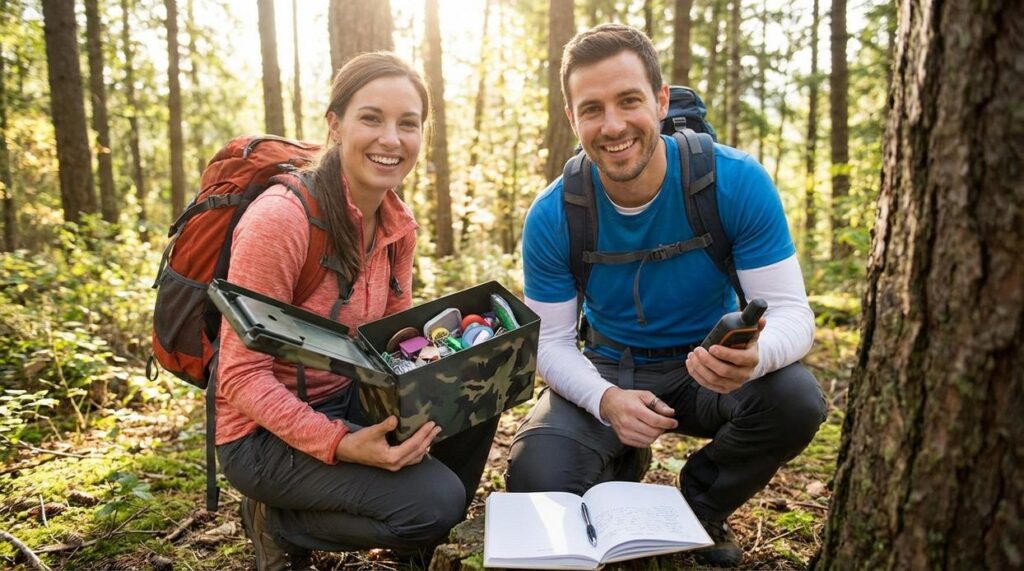
Geocaching is a real-world treasure hunt powered by GPS (Global Positioning System, a satellite-based navigation tool that pinpoints your exact location). Players search for hidden containers—called geocaches—using precise latitude and longitude coordinates.
Think Pokémon GO, but with actual physical treasure (and fewer animated creatures).
How to Start
Getting started is simple:
- Download a geocaching app on your smartphone.
- Create a free account to access nearby cache listings.
- Choose a beginner-friendly cache (look for low difficulty ratings).
- Navigate to the coordinates using your phone’s map and compass.
- Search carefully—caches are often hidden in plain sight.
Pro tip: Start in a local park with wide trails and clear landmarks to build confidence before attempting rugged terrain.
Navigation in Action
Geocaching sharpens your digital map skills. You’ll learn to interpret coordinates, follow directional arrows, and adjust when GPS accuracy shifts (which can vary by 3–10 meters depending on satellite connection, according to GPS.gov). It’s hands-on navigation practice without the pressure of wilderness survival.
For families, try Use micro-adventure ideas in the section once exactly as it is given to transform a short hike into a mission with purpose.
Outdoor Ethics Matter
Always follow Leave No Trace principles—pack out what you pack in and disturb nothing. If you trade items, leave something of equal or greater value. Sign the logbook and replace the cache exactly as found. For deeper guidance, review how to practice leave no trace principles effectively: https://lerakutycave.com/how-to-practice-leave-no-trace-principles-effectively/
Because the real treasure? Keeping the outdoors wild for the next explorer.
Exploring Below the Surface: A Beginner’s Look at Caving
For a truly unique small-scale excursion, consider visiting a commercial or show cave—a publicly accessible cave system designed for safe exploration. With paved walkways, installed lighting, and guided tours, these caves make underground environments accessible without ropes, helmets, or technical training. According to the National Speleological Society, millions of people visit show caves in the U.S. each year with remarkably low injury rates compared to undeveloped cave exploration (NSS.org). That safety record isn’t an accident.
Some purists argue that guided caves aren’t “real” caving. They prefer wild systems with no railings or lights. Fair point. But for beginners, evidence shows controlled environments significantly reduce risk while still delivering geological wonder. Think of it as the training wheels phase—still thrilling, just smarter.
What to Expect:
- A constant temperature, typically matching the region’s average annual temperature (often 50–60°F in the U.S., per the National Park Service).
- Damp, sometimes slippery terrain.
- Stunning formations like stalactites and stalagmites (formed over thousands of years through mineral deposition).
Bring a light jacket and wear sturdy, closed-toe shoes with solid traction.
Gear Tip: Even on lit tours, a compact headlamp adds depth to your experience. Focused light reveals mineral textures and hidden crevices (yes, you’ll feel like you’re in an adventure film—minus the dramatic soundtrack).
For those testing micro-adventure ideas, a local show cave is a low-commitment, high-impact way to explore beneath the surface.
Paddling your local lake or slow-moving river sounds ordinary. It’s not. From water level, familiar shorelines feel rewilded, like you’ve stepped into a behind-the-scenes nature documentary (yes, cue the David Attenborough voice).
Many people assume you need remote wilderness for adventure. I disagree. Some of the best micro-adventure ideas start ten minutes from home. A rented kayak, canoe, or stand-up paddleboard can reveal inlets, bird nesting sites, and coves you never notice from the road.
Safety basics matter more than Instagram moments.
- Check the weather forecast before launching.
- Wear your PFD at all times.
- Practice self-rescue techniques in shallow water.
Contrary to popular advice, cotton isn’t “fine if you don’t plan to swim.” It traps moisture and chills you fast. Choose quick-drying synthetics and stash essentials in a waterproof dry bag.
Pro tip: Paddle at sunrise for calmer water and fewer boats on busy holiday weekends.
Start simple. Pick one of these micro-adventure ideas and schedule it today. For example, map a two-mile micro-hike on Saturday morning, pack water, and tell a friend your route. Then, set a calendar reminder. Momentum builds quickly; action beats overthinking. Your next story begins outside. It’s closer than you think.
Ready for Your Next Underground Challenge
You came here looking for clarity—how to approach cave trekking with confidence, sharpen your survival skills, and understand the terrain before you ever step underground. Now you know what it takes to prepare properly, navigate safely, and choose gear that won’t fail when conditions get tough.
The real risk isn’t the cave—it’s going in unprepared. Poor navigation, weak planning, and the wrong equipment can turn an exciting trek into a dangerous situation fast. That’s the pain point most adventurers only recognize when it’s too late.
Instead, take what you’ve learned and start small. Test your skills with micro-adventure ideas that build confidence before committing to deeper, more technical routes. Practice navigation. Refine your gear setup. Study terrain like a pro.
If you’re serious about exploring smarter and safer, dive into our expert cave trekking guides and survival breakdowns today. We’re a trusted source for outdoor insight—get the knowledge you need now and make your next expedition your strongest yet.