Stepping into a cave is like entering another world. No landmarks, no sky. That thrill?
It’s paired with serious risks. GPS won’t help you here. Lost underground is a real threat.
Standard maps are useless. You’ve got to read cave maps. It’s a skill, a necessity.
This guide? Your first step. I’ve spent years in these dark places, navigating tunnels, analyzing terrain.
Trust me, I know my way around these labyrinths. But why trust me? Because I’ve been there, felt the chill of disorientation.
I’ve turned chaos into clarity. You want to explore safely, right? Understand this hidden world?
You’re in the right place. This article will teach you everything you need to find, read, and use specialized cave maps. You’ll explore with confidence.
Let’s go deeper.
GPS Lost: Underground Adventures
Ever tried using your phone’s GPS in a cave? Good luck. GPS signals can’t punch through rock and soil. It’s like trying to yell at someone through a brick wall. (Spoiler alert: they won’t hear you.) Once you go underground, your phone becomes little more than an expensive flashlight.
You’d miss all those elevators and staircases hugging the walls. Standard maps simply can’t handle the ups and downs of caves. Reading them would be like trying to read cave maps with a blindfold.
Caves aren’t just tunnels. They’re wild, three-dimensional mazes. Imagine navigating a skyscraper with only the ground floor blueprint.
Here’s where cave surveying comes into the picture. It’s like cartography’s cool, adventurous cousin. These specialists create detailed maps that actually make sense when you’re wandering in the dark.
And let’s face it, if you’re spelunking (that’s cave exploring for the uninitiated), having a proper map is as important as knowing a few survival skills unexpected cave emergencies might demand.
Cave maps let you understand the underground world’s twists and turns. They help make sense of the chaos when GPS abandons you. So next time you dive into the depths of the earth, leave the GPS at the entrance and embrace the art of real exploration.
Cave Maps Unlocked: Reading Symbols and Lines
Ever tried to read cave maps and felt like you needed a secret decoder ring? You’re not alone. Let’s break it down.
When you first open a cave map, you’ll typically encounter two views. The “Plan View” shows you a bird’s-eye perspective. It’s like you’re flying over the cave, seeing every twist and turn from above.
Then there’s the “Profile View” or “Elevation View.” This one lets you peer at the cave from the side, revealing its depth and layers. Both views are important, but each tells a different story.
Let’s talk symbols. They’re everywhere on cave maps, speaking their own language. A “Breakdown” symbol looks like a jagged pile of rocks.
In the cave, it’s just that (piles) of fallen rock. Water features have their own signs too. Pools, streams, and sumps might be marked with wavy lines or circles.
They can be tricky and deserve respect (or a wide berth).
Floor features are next. Sand, mud, and bedrock are all represented with distinct symbols. You’ll often see lines or textures indicating what lies underfoot.
And don’t ignore passage details. Numbers can indicate ceiling height, and arrows might suggest inclines or declines. Survey stations, those little dots or crosses, show where explorers have collected data.
Formations like stalactites and columns have their own icons. They’re the artistic showpieces of any cave, hanging from ceilings or rising from floors. Now, lines on a map can tell you about certainty.
Solid lines mean surveyed passages, while dotted lines suggest educated guesses or hopes.
But why bother with all this? Knowing how to read a cave map could be the difference between a safe adventure and a dangerous detour. Check out cave mapping for more takeaways on the art and science behind these maps.
Pro tip: Always double-check your map before heading underground. It’s easy to miss a symbol or misread a line when you’re eager to explore. And let’s face it, getting lost in a cave is not on anyone’s bucket list.
In a world where GPS signals can’t reach, your map is your best friend. So spend time with it. Learn its language.
Next time you’re out there, you’ll get through confidently but also appreciate the cave’s hidden stories.
Cave Maps: Your Adventure Guide
Let’s cut to the chase. If you’re serious about reading cave maps, you need reliable sources. Trust me, the best place to start is with a local caving club or “grotto.” These folks breathe caving (almost literally) and usually have the most up-to-date maps.
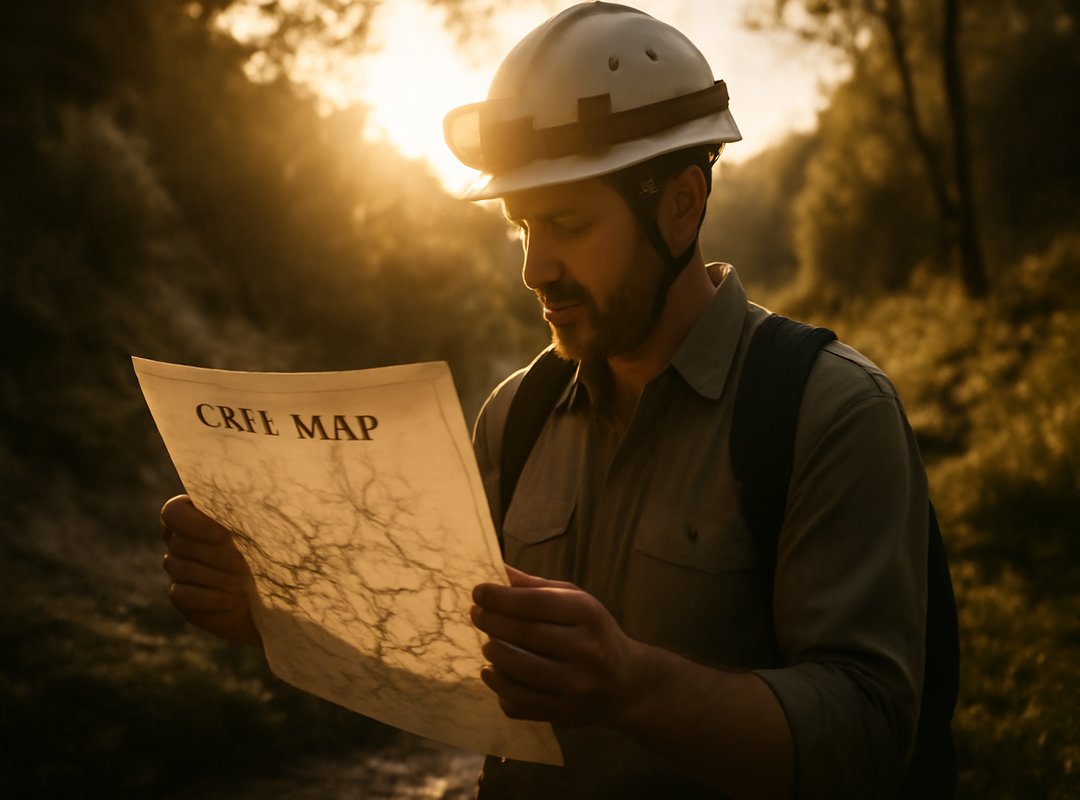
National organizations and official geological surveys are also solid bets. They often have well-documented maps, thanks to years of meticulous research. But please, do yourself a favor and steer clear of random maps you stumble upon in blogs or image searches.
They can be outdated or just plain wrong, leading you into sketchy situations.
Ask yourself: does the map you’re holding come with a date? Does it have a surveyor’s name, a scale, and a North arrow? A legend for symbols?
If not, it’s not worth the risk. New discoveries can change the layout of a cave, making old maps useless. Or worse, dangerous.
Now, before you dive into your adventure, understand the ethics of cave conservation. Not all caves are public knowledge, and for good reason. Protecting these environments keeps them pristine for future explorers.
Some people feel entitled to every bit of land, but caves are fragile.
A final pro tip? Read up on common mistakes new cave trekkers make to avoid unnecessary hassles (you don’t want to be that person). Check out this guide to the Top 10 Mistakes New Cave Trekkers.
It’s a lifesaver for beginners and sometimes even for seasoned pros. Ready to head underground? Choose your maps wisely, and enjoy your journey!
Navigating the Depths: Making Maps Work in Caves
Using a map in a cave isn’t as easy as it sounds. You’ve got to actually read cave maps. (Sounds obvious, right?) You start by orienting it with a compass and a fixed point. Imagine standing by a distinctive rock formation and aligning your map so north on both the map and compass match.
It’s like trying to stay grounded in reality when everything around you looks the same.
Then there’s ‘dead reckoning.’ Not as morbid as it sounds. It involves tracking from a known point like the entrance. You count paces and turns.
Literally. This means remembering every twist and turn like you’re in a live-action video game (but with higher stakes).
Do you cross-check that with the map? You bet. Look around.
Does this narrow passage actually match what’s on paper? If not, recalibrate. Trust your eyes and your instincts.
Yes, technology can help. Sure, you might use a phone in airplane mode with a pre-loaded map image. But don’t rely solely on it.
Electronics fail when you least expect it. Always carry a physical, waterproof map and compass. It’s not just about being prepared; it’s about staying alive.
And hey, at least paper doesn’t have battery issues.
Dive Into the Depths with Confidence
Venturing into the mysterious depths of a cave feels daunting without the right guide. You know the fear (getting) lost in a maze of shadows. But here’s the breakthrough: a cave map isn’t just paper.
It’s your lifeline. When you read cave maps, fear morphs into bold exploration. The map is your shield, your guide, transforming unknown dangers into an adventure map.
Think about it. Would you step into the wild unprepared? Of course not.
Your safety depends on these maps. Ready to take the leap? Join a local caving group.
Put your newfound skills to the test. You’ll soon find those twisting tunnels aren’t the enemy. They’re your playground.
Grab your map. Start your adventure. Don’t get left in the dark.
 Janice Martinezelous has opinions about cave navigation and terrain analysis. Informed ones, backed by real experience — but opinions nonetheless, and they doesn't try to disguise them as neutral observation. They thinks a lot of what gets written about Cave Navigation and Terrain Analysis, Cave Trekking Basics and Survival Skills, Horizon Headlines is either too cautious to be useful or too confident to be credible, and they's work tends to sit deliberately in the space between those two failure modes.
Reading Janice's pieces, you get the sense of someone who has thought about this stuff seriously and arrived at actual conclusions — not just collected a range of perspectives and declined to pick one. That can be uncomfortable when they lands on something you disagree with. It's also why the writing is worth engaging with. Janice isn't interested in telling people what they want to hear. They is interested in telling them what they actually thinks, with enough reasoning behind it that you can push back if you want to. That kind of intellectual honesty is rarer than it should be.
What Janice is best at is the moment when a familiar topic reveals something unexpected — when the conventional wisdom turns out to be slightly off, or when a small shift in framing changes everything. They finds those moments consistently, which is why they's work tends to generate real discussion rather than just passive agreement.
Janice Martinezelous has opinions about cave navigation and terrain analysis. Informed ones, backed by real experience — but opinions nonetheless, and they doesn't try to disguise them as neutral observation. They thinks a lot of what gets written about Cave Navigation and Terrain Analysis, Cave Trekking Basics and Survival Skills, Horizon Headlines is either too cautious to be useful or too confident to be credible, and they's work tends to sit deliberately in the space between those two failure modes.
Reading Janice's pieces, you get the sense of someone who has thought about this stuff seriously and arrived at actual conclusions — not just collected a range of perspectives and declined to pick one. That can be uncomfortable when they lands on something you disagree with. It's also why the writing is worth engaging with. Janice isn't interested in telling people what they want to hear. They is interested in telling them what they actually thinks, with enough reasoning behind it that you can push back if you want to. That kind of intellectual honesty is rarer than it should be.
What Janice is best at is the moment when a familiar topic reveals something unexpected — when the conventional wisdom turns out to be slightly off, or when a small shift in framing changes everything. They finds those moments consistently, which is why they's work tends to generate real discussion rather than just passive agreement.